Basel: one city, three railways
Swiss, French and German trains all end or meet in Basel, in stations that sit on borders of their own. Knowing which is which saves time, walking and confusion at the change.
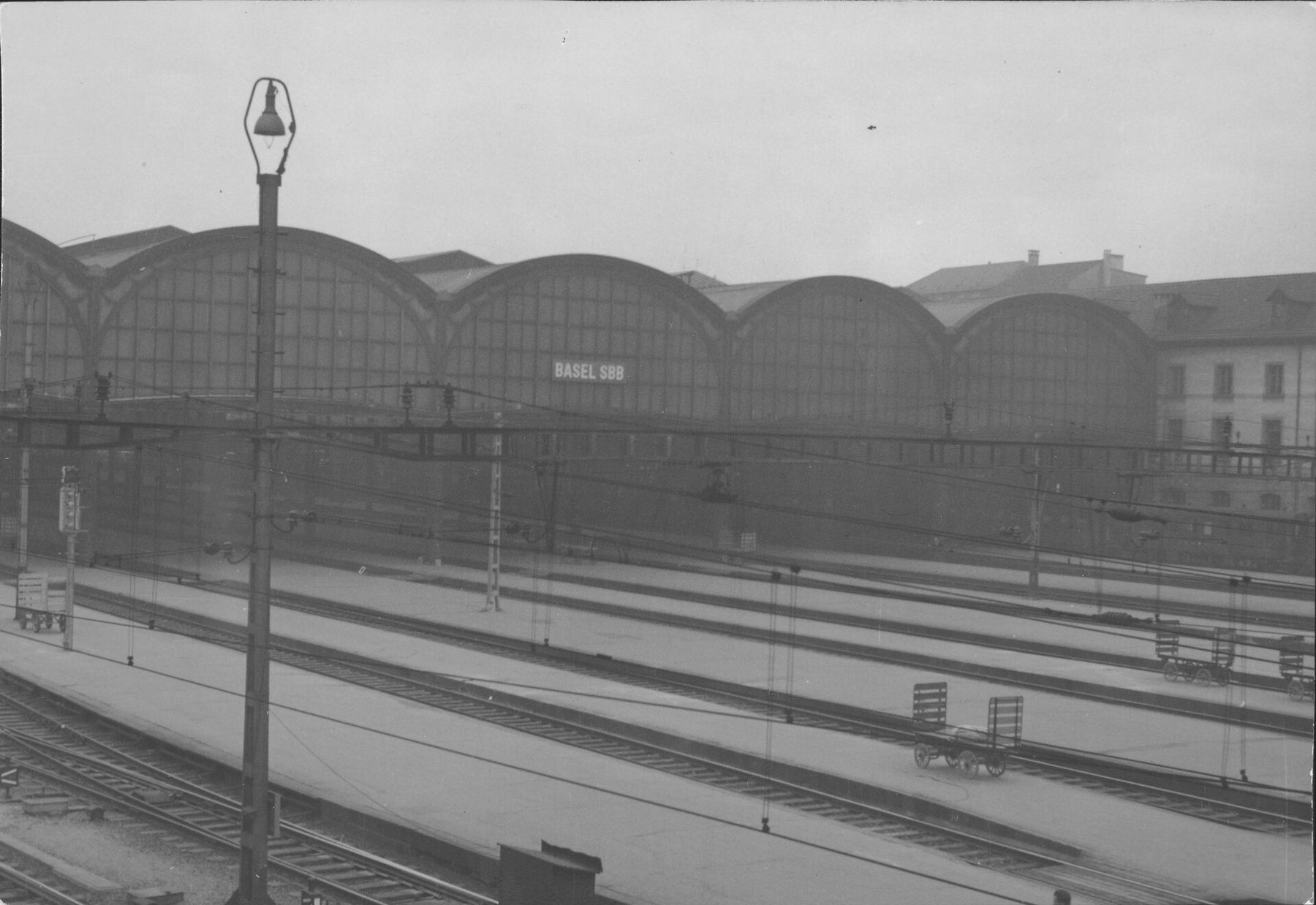
i
Photo by unbekannt · CC BY-SA 4.0
Basel sits where Switzerland, France and Germany meet, on a bend of the Rhine. The city has grown up around that position, and so has its railway. Three national networks come together here, in stations that do not quite belong to one country. For a traveller, the result is a city where the question is not only which train, but which station, and which side of which border.
Basel SBB, the main station
Basel SBB is the main station, on the south side of the city centre. It is a Swiss station, run by SBB, with a large hall, a long footbridge over the tracks, and platforms for Swiss intercity trains to Zürich, Bern, Lucerne and the Gotthard, as well as many international services. High-speed trains from Paris on Line F to Zürich stop here on the Swiss side.
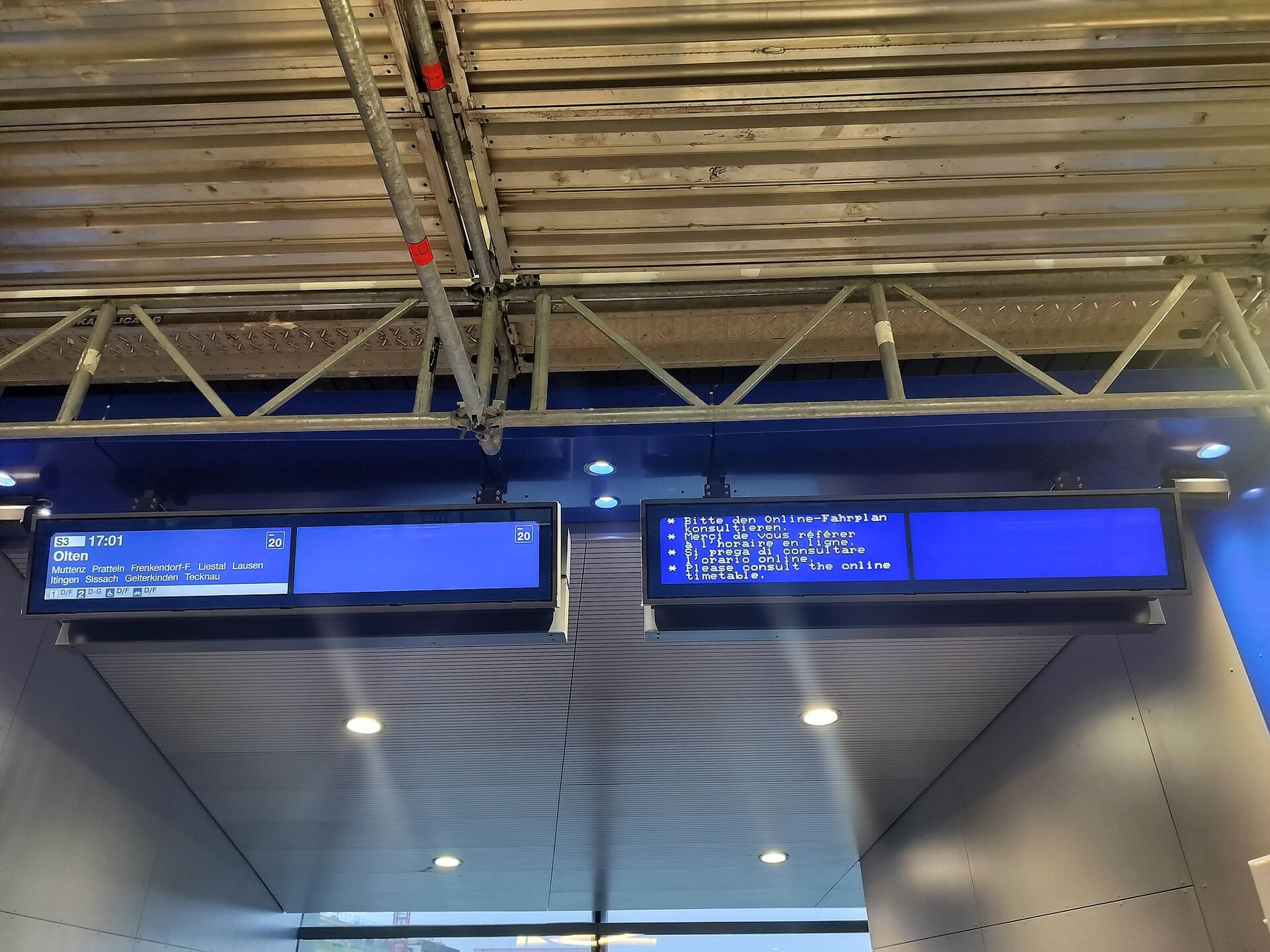
i
Photo by OpenCatMap · CC BY-SA 4.0
The station's main building faces a square, the Centralbahnplatz, where trams stop in front of the entrance. Behind it, the footbridge over the platforms gives access to every track and to the southern side of the station. Lifts and escalators connect it to the platforms below.
The footbridge is the key to the station. Almost every change at Basel SBB means going up to it, along it and down again, so look for the lift or escalator at your end of the platform as soon as you step off. The bridge also holds shops and places to buy food, and it gives a clear view down over the tracks, useful for spotting your next train before you reach it. Allow ten minutes for an ordinary change between Swiss platforms, more with heavy bags.
The French section at the western end
At the western end of Basel SBB is the French section, a separate part of the station with its own platforms for French regional trains from Mulhouse and Strasbourg. For decades it was run as a French station within the Swiss one. Today it is still separated from the rest of the station by a customs and border passage, and its signs and trains are French.
If you arrive from France on a regional train and continue into Switzerland, you will walk from the French platforms through this passage into the Swiss part of the station. Allow time: the walk is not long, but it can be slow if there are checks, and the French platforms are at the far end from many Swiss ones.
Badischer Bahnhof, a German station in Switzerland
Basel Badischer Bahnhof stands on the north side of the Rhine, in Kleinbasel. It is a German station on Swiss soil, run by the German railways under an old agreement between the two countries, and it is the end point of German lines from Freiburg, Karlsruhe and the Rhine valley. Many German long-distance trains call here before continuing to Basel SBB, and some end here.
The building, from the 1910s, has a large hall and a separate customs area. Inside the station, you may pass Swiss and German customs points as you move between the platforms and the city. Tickets and fares can also change at the border in ways that are not obvious; a German ticket may be valid only to the Badischer Bahnhof, or only to Basel SBB, depending on how it was issued.
Change here forChanging trains at Hamburg HauptbahnhofA change of one hourBorders, customs and tickets in general
All three countries are in the Schengen area, so passport checks at Basel are not routine, although they do occur. Switzerland, however, is not in the EU customs union. That means customs checks on goods can happen at any of the border points in Basel's stations, and occasionally on trains.
- Carry your passport or national identity card, even if you do not expect to show it.
- Keep receipts for expensive items you are carrying across the border.
- Check where your ticket starts and ends. A through ticket from Germany to Switzerland, or from France to Switzerland, protects your connection; separate tickets do not. See through tickets and missed connections.
The Rhine and the trams between stations
Basel SBB and the Badischer Bahnhof are about two and a half kilometres apart, on opposite sides of the Rhine. The easiest way between them is the tram: Basel has a dense network, and a direct tram line links the two stations in roughly ten to fifteen minutes. Regional trains also run between them. Check the tram number on the board in front of either station.
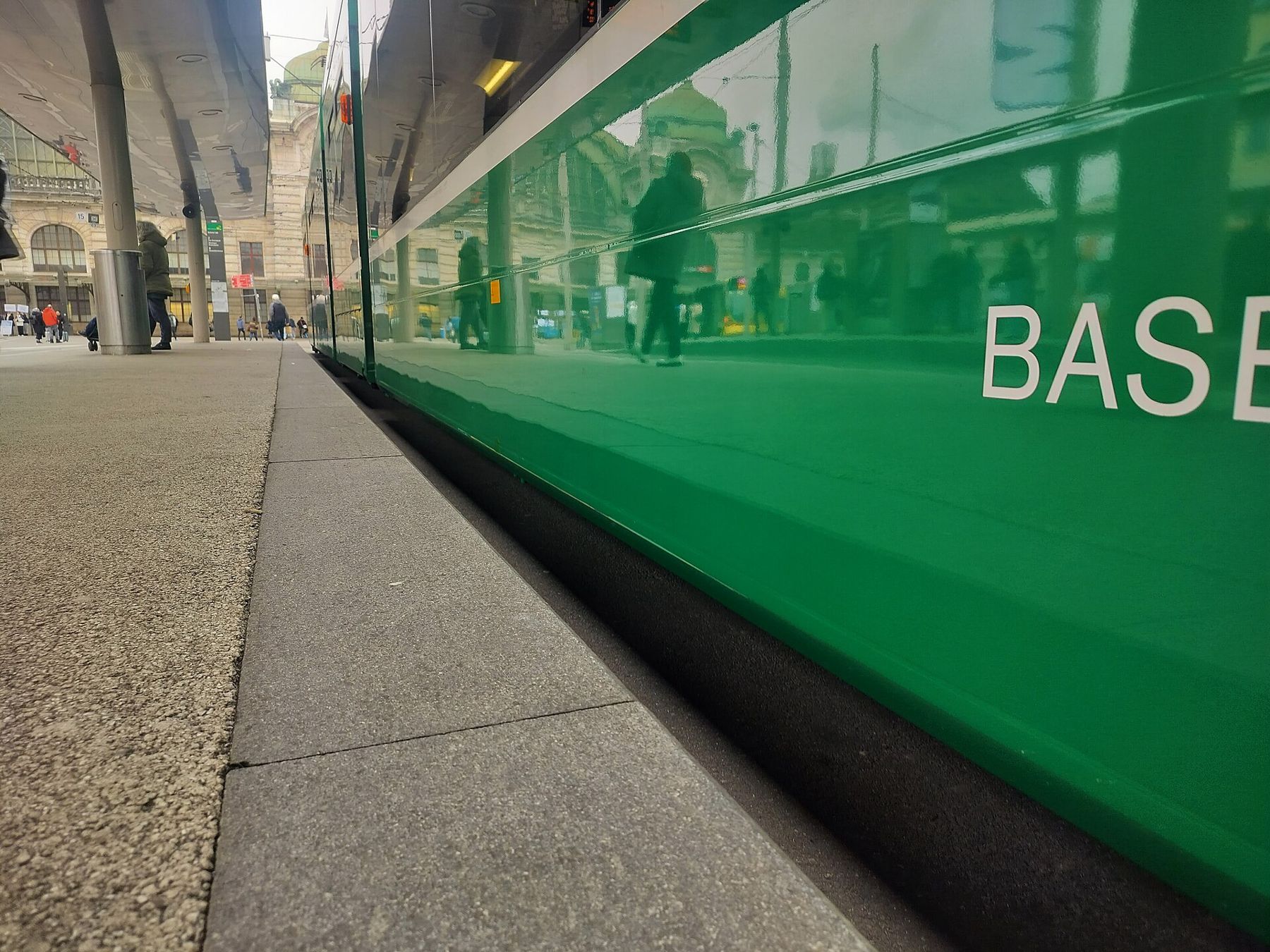
i
Photo by OpenCatMap · CC BY-SA 4.0
On the way, the tram crosses the Rhine on one of the city's bridges. The river here is wide and fast, and in summer people swim in it, floating downstream with their belongings in waterproof bags. Small ferries without engines cross the river between the banks, moved by the current alone and held on a cable. If you have time between trains, a crossing on one of them is the shortest and most Basel way to see the river.
Basel's trams also run across the borders: lines continue into France and Germany, so you can ride from the city centre to the neighbouring towns without a train at all.
When Basel is worth a night
Basel is a small city with a large old town on the hill above the Rhine, a red sandstone cathedral and a cluster of art museums. It makes a good stopping point between Paris and the Alps, or between Germany and Italy. Its stations, once you know which is which, make it one of the easiest places in Europe to cross a border by train. Luggage, seats and the walk between platforms has more general advice for changes like these.