Luggage, seats and the walk between platforms
Most of the effort in a long rail journey happens between trains: on stairs, in lifts, along platforms and at the carriage door. A few habits make every change easier.
i
Photo by Paul Hermans · CC BY-SA 3.0
A rail journey across Europe is mostly sitting still, punctuated by short bursts of effort: getting off one train, crossing a station, finding the right part of a long platform, and getting on the next train with everything you own. Those few minutes decide whether a change feels smooth or frantic. Most of what helps is simple, and most of it comes down to luggage.
One bag you can lift
The best luggage for rail travel is a bag you can carry up a flight of stairs without help and lift onto a rack above your head. Big wheeled cases glide across a station hall and become a burden at the first staircase, the first gap between platform and train, the first crowded corridor. On many trains, luggage space is limited to racks above the seats, the gaps between seat backs, and a few larger racks near the doors, which fill early.
If you must travel with a large case, board early, put it in the racks at the end of the coach if there is space, and sit where you can see it. Keep valuables, documents, medicines and anything you need on the journey in a smaller bag that stays with you.
Before each change, pack up a few minutes early. Put your jacket on, close your bags, and stand near the door as the train slows. Trains at large stations wait only a short time, and the passengers getting on will not wait for you to finish packing.
Stairs, lifts and the long way round
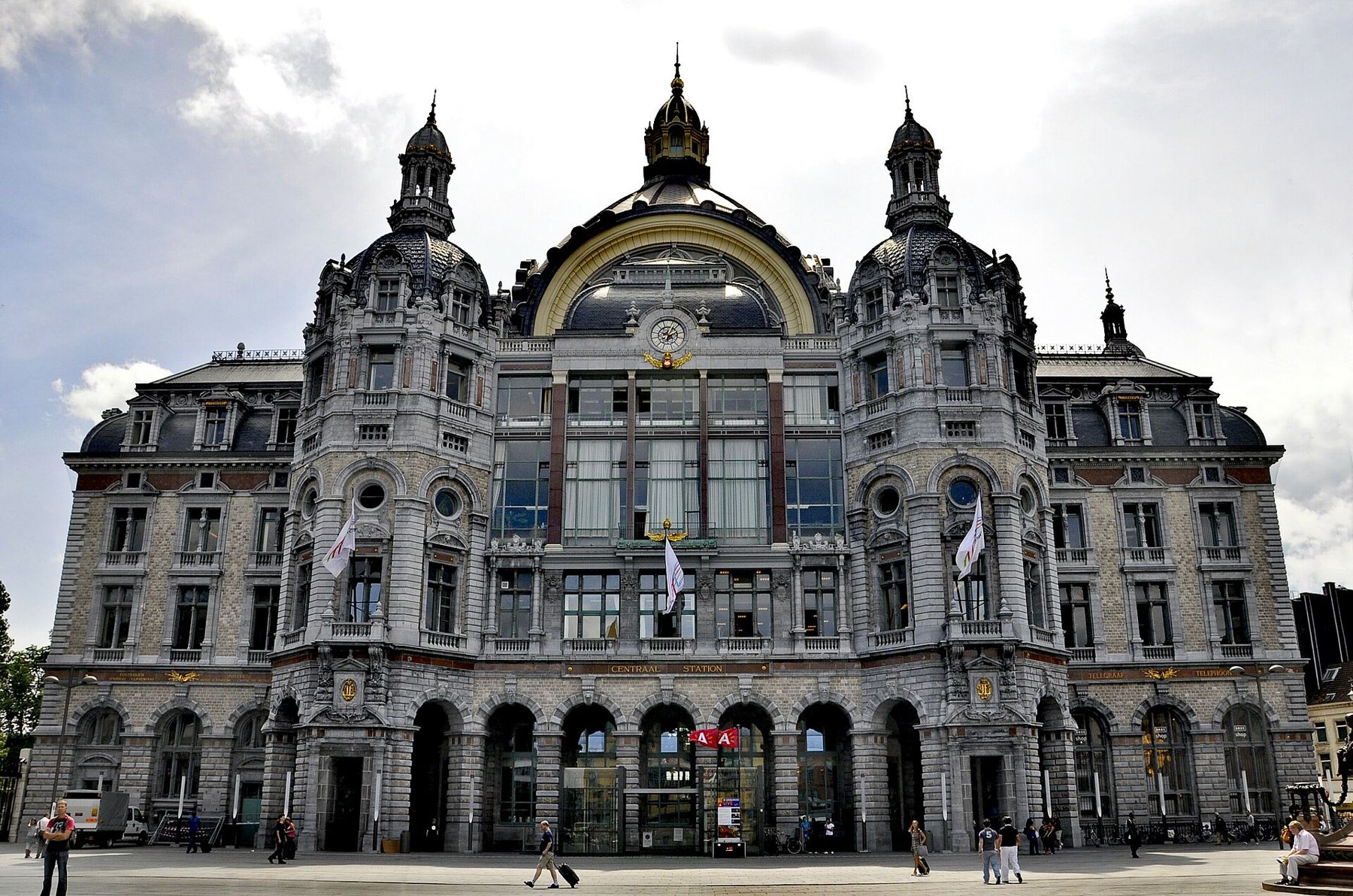
Large stations are built in layers, and the way between two platforms can involve more height than you expect. At Hamburg Hauptbahnhof, the platforms lie below the level of the concourse, reached by stairs and escalators from the bridges that cross the hall; at busy times the stairs are crowded and the escalators slow. At Basel SBB, a broad footbridge crosses above the tracks, and the French platforms are at one end of the station, with their own access. At Antwerpen-Centraal, trains stop on three levels, one above another, and a train for the Netherlands may leave from the deepest level while you arrived on the highest.
Lifts exist at most large stations, but they can be small, slow, out of service or in unexpected places. Look for the lift as soon as you arrive rather than when you need it, and allow extra time if you depend on it. Escalators often run in one direction only, and not always the one you want.
Coach numbers and platform sectors
i
Photo by Trougnouf · CC BY 4.0
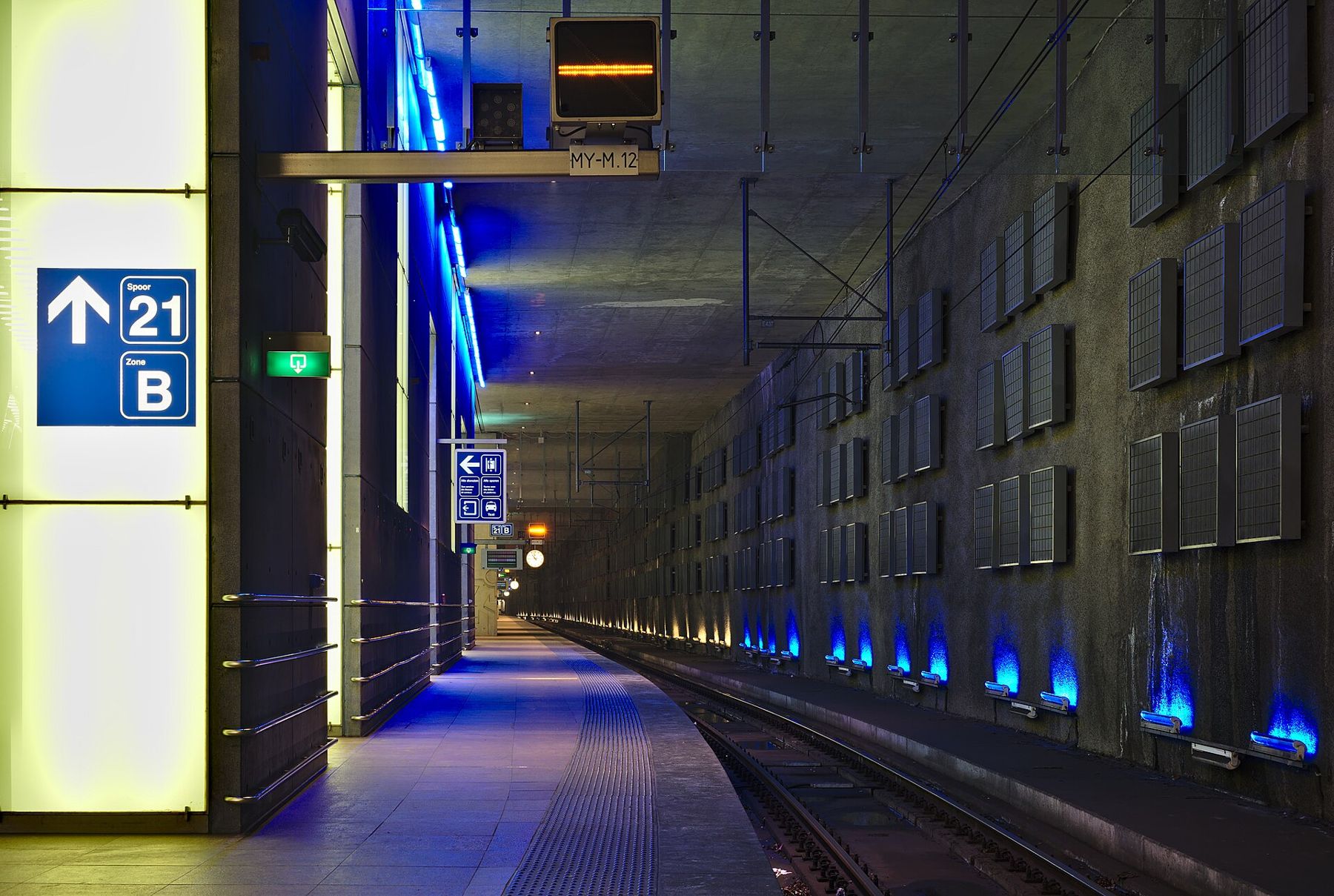
Long-distance trains can be very long, and a reserved seat is only useful if you are standing near the right coach when the train arrives. In Germany, Switzerland and several other countries, platforms are divided into lettered sectors, marked on signs along the platform. Boards on the platform show the order of the coaches for the trains that call there, and which sector each coach stops in. Find your coach number on your ticket or reservation, look it up on the board, and walk to that sector before the train arrives.
Change here forBasel: one city, three railwaysTen to twenty minutes between stationsThe order of coaches can change at short notice, and announcements on the platform often warn of it. Listen, and watch the displays above the platform. If the train has two parts that divide later in the journey, make sure you are in the part going to your destination: the coach numbers and the displays on the train will say so.
Reserved seats and open seats
On trains where reservations are optional, you can sit in any seat that is not reserved for the part of the journey you are travelling. Reserved seats are marked, by a small display above the seat or a label on the seat back, with the stretch for which they are taken. A seat reserved from a later station is free until then. If someone holds a reservation for a seat you are in, they are entitled to it, and you move.
On fully reserved trains, such as many high-speed services, you sit in the seat on your reservation, and boarding without one may not be allowed. The general rules are covered in through tickets and missed connections.
On scenic lines, the side you sit on can matter, but it is often less clear-cut than people say: lines twist, and the best side changes. A seat facing forward with a clean window is usually worth more than a theory about left and right.
Eating on long legs
Some long-distance trains have a restaurant or bistro car, some have a trolley, and many regional trains have nothing at all. Do not assume food will be on board, especially on regional connections in Italy, on mountain lines, or on the last trains of the evening. Carry water and something to eat for any leg longer than a couple of hours, and use a long change at a big station to buy more.
Daylight on the mountain lines
The best railway journeys in this guide pass through mountains: the Bernina line from Tirano, the old Gotthard line, the Bergen Line across the plateau and the branch down from Myrdal. These are journeys to make in daylight. When you plan, put the mountain legs in the middle of the day, and leave the flat stretches and the night trains for the early morning and the evening. In winter, when the days are short, this matters more. A missed connection that pushes a mountain leg into darkness costs you the very thing you came for, which is a good reason to leave generous gaps between trains. For one such journey, see Milan to St. Moritz over the Bernina.