Zürich to Milan, under the Gotthard
Line A runs south from the Limmat to Lombardy in about three and a half hours, most of it through one mountain rather than over it. The old line is still there for those with time.
i
Photo by Hannes Ortlieb ( Diskussion ) · CC BY-SA 3.0 de
Line A is the simplest journey on this map. A through train leaves Zürich Hauptbahnhof, crosses the Alps by going under them, runs along two Italian-speaking lakes and arrives at Milano Centrale roughly three and a half hours later. Through trains run for most of the day, operated jointly by SBB and Trenitalia, and nobody asks you to move your bags. The interest lies in what passes the window, and in the choice you can make halfway: stay in the tunnel, or climb over the top on the line that came first.
Out of Zürich and down to the lake at Zug
The train leaves Zürich heading south through suburbs and a long tunnel, then comes out at Zug, where the line follows the eastern shore of the Zugersee. Heading south, the water is on the right. The slopes on the far side rise to the Rigi, and on a clear morning the first snow peaks appear over its shoulder.
Arth-Goldau is the first junction that matters. Lines from Lucerne, Zürich and the northeast meet here before the climb towards the Gotthard, and the station sits in the debris field of a landslide that buried the old village of Goldau in 1806. The through train may stop only briefly. If you are coming from Lucerne rather than Zürich, Arth-Goldau is where your connection joins the main line, and its platforms are compact enough that a change is quick.
South of Arth-Goldau the line runs through Schwyz to Brunnen and then along the Urnersee, the steep southern arm of Lake Lucerne, again with the water on the right going south. This is the part of Line A that reads most like a landscape painting: cliffs dropping into green water, a road cut into the rock opposite, the village of Flüelen at the head of the lake.
i
Photo by Kecko · CC BY 2.0
Fifty-seven kilometres without a view
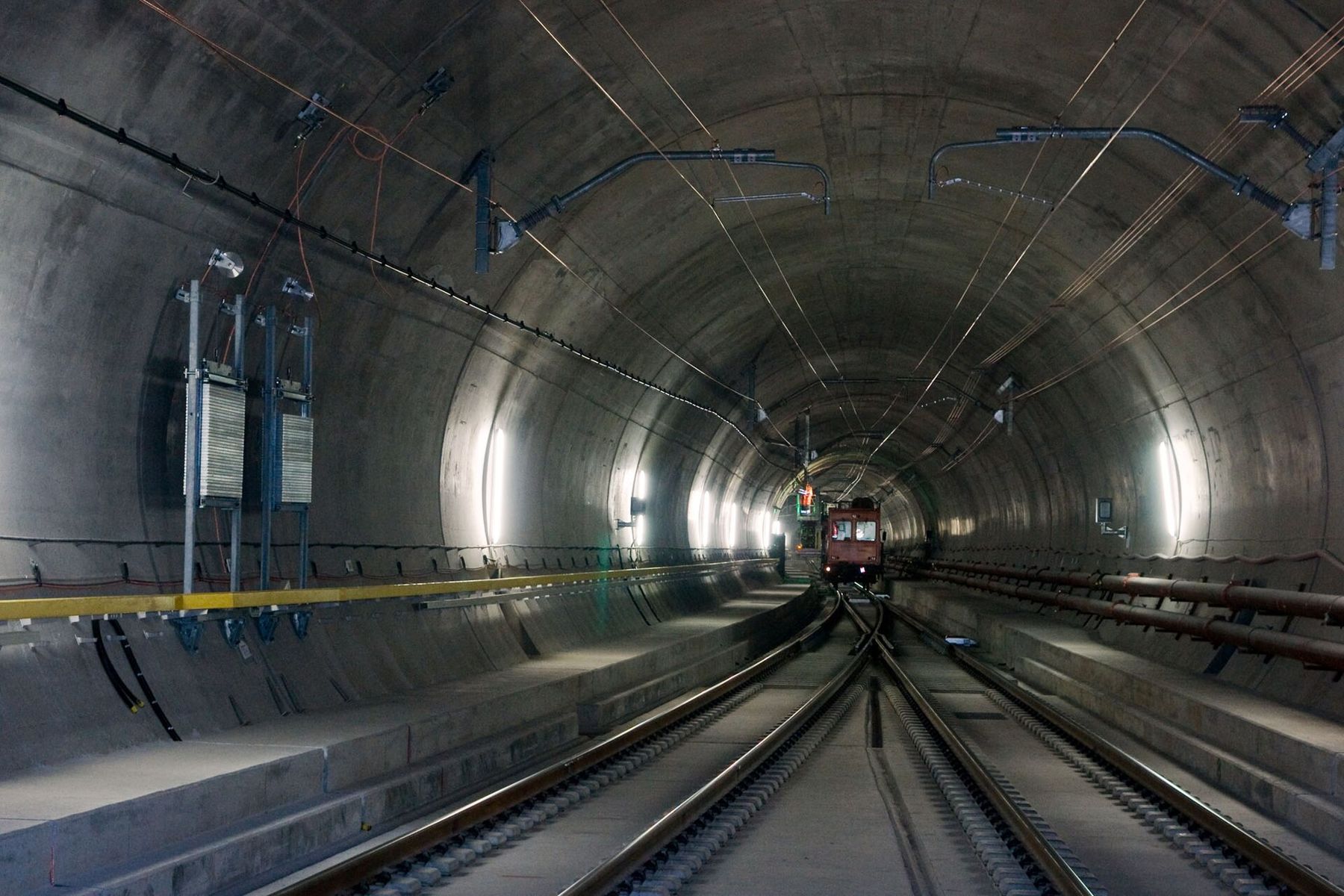
At Erstfeld the train enters the Gotthard Base Tunnel, opened in 2016 and, at about 57 kilometres, the longest railway tunnel in the world. It is a flat route: the tunnel runs at the level of the valley floors rather than climbing, which is the whole point of it. Heavy freight and fast passenger trains can cross the Alps without the gradients and curves of the mountain line above.
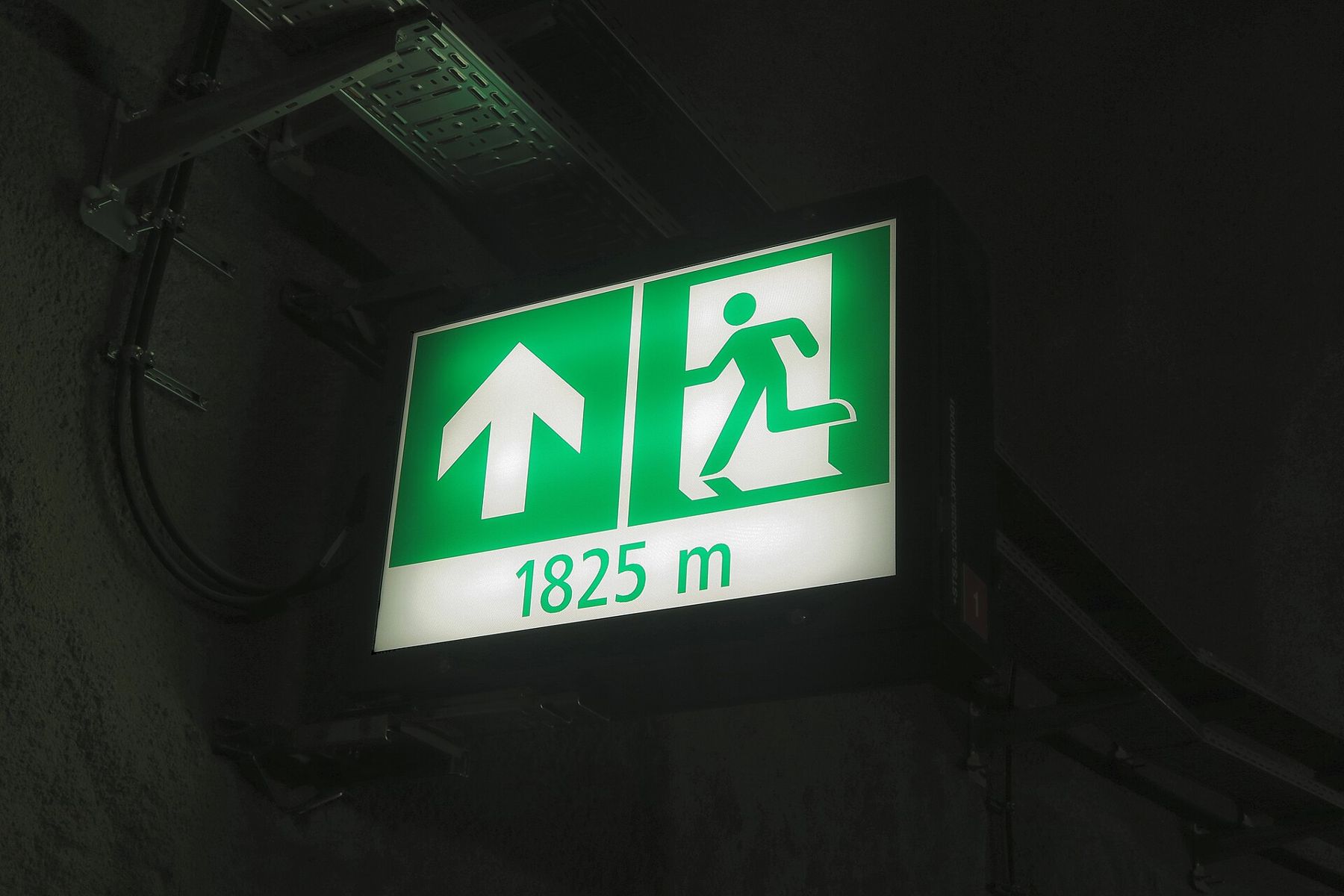
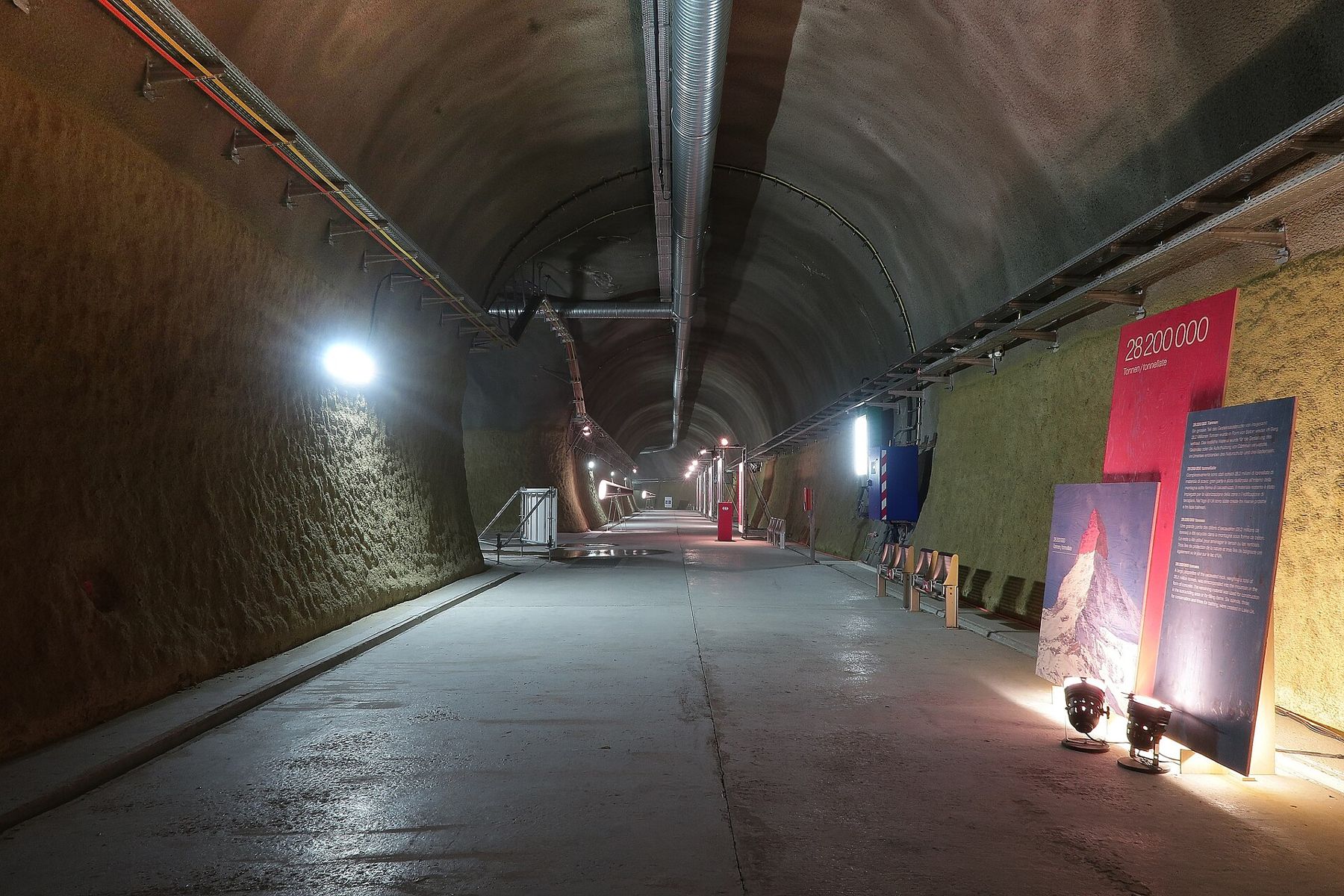
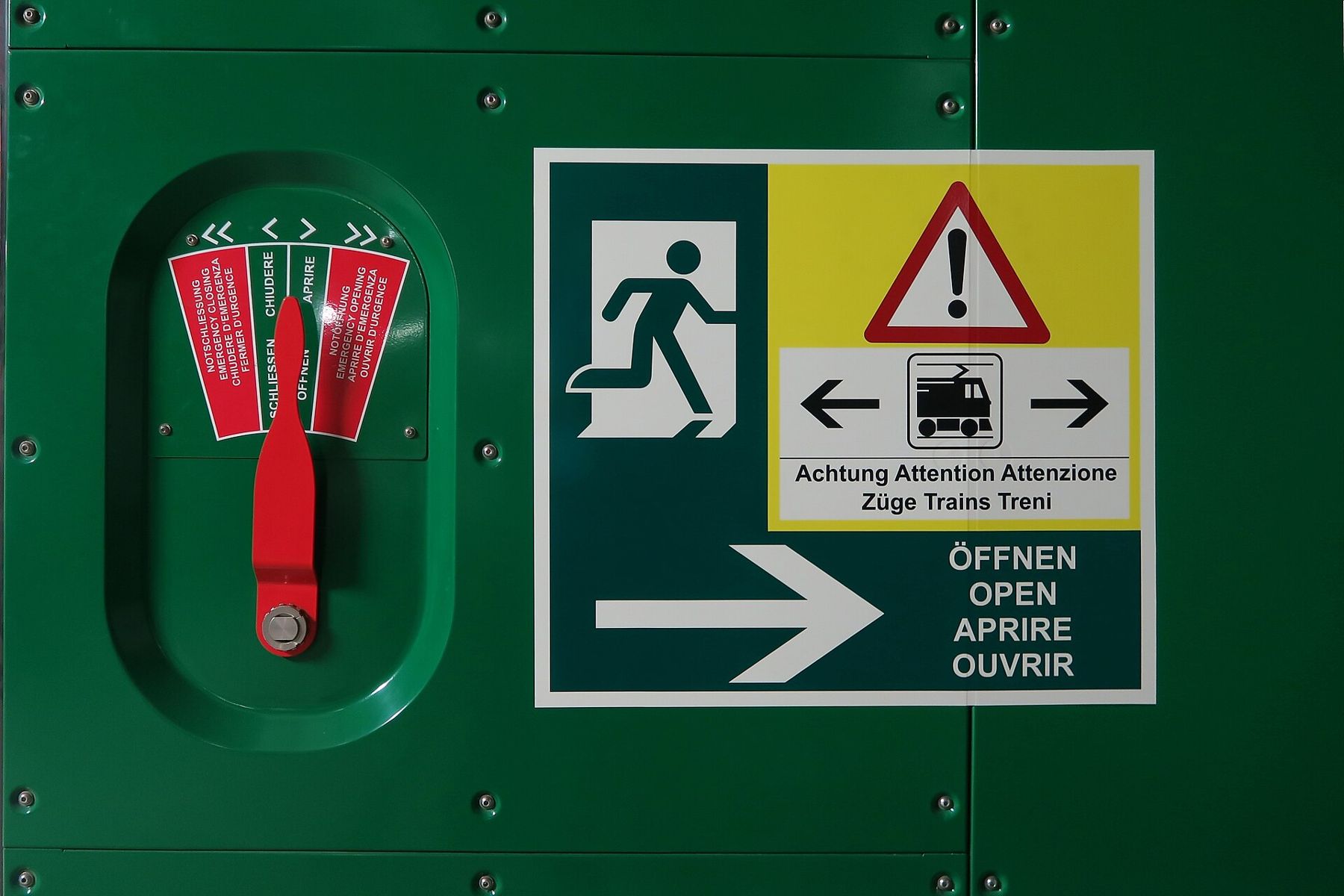
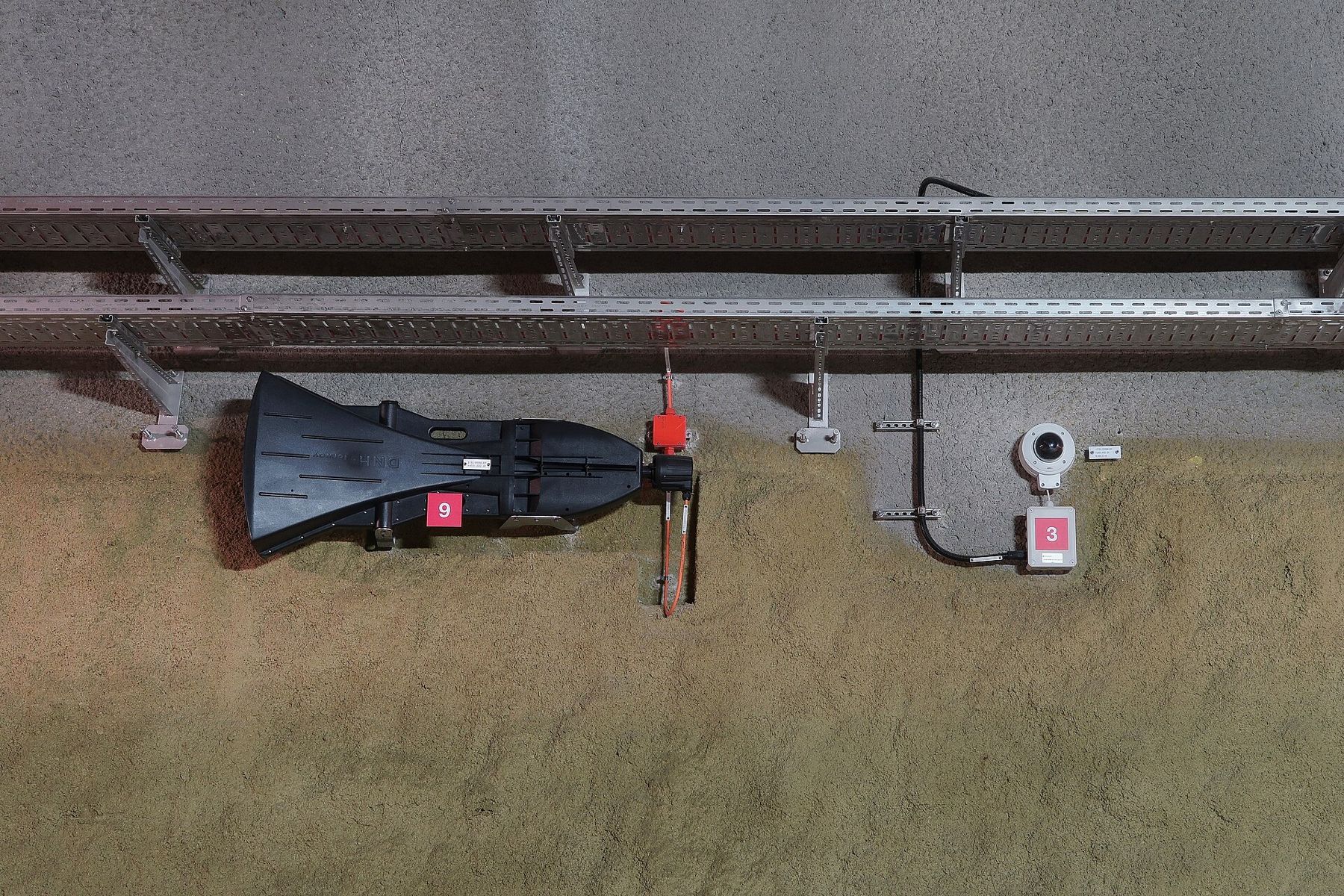
From inside a passenger coach, the tunnel is simply dark, for something like a quarter of an hour at speed. What you do not see is the engineering around you. The tunnel is two single-track tubes linked by cross-passages at regular intervals, and two multifunction stations deep inside the mountain, at Sedrun and Faido, allow trains to switch tubes and give passengers a safe place to leave a train in an emergency. Neither is a station in the ordinary sense: there are no stops there for travellers.
i
Photo by Kecko · CC BY 2.0
The train comes out at Bodio in the Leventina valley, and the change is immediate. The light is different, the houses are stone with grey slab roofs, and the station signs are in Italian. You are still in Switzerland, in the canton of Ticino, and you will be until Chiasso.
Ticino by the lakes
Bellinzona comes quickly, a town of three castles on the slopes above the station. South of it the train enters a second base tunnel, under Monte Ceneri, opened in 2020, which removed the last steep climb on the route. When it emerges, the train is above Lugano.
Lugano station sits on a terrace high above the town and its lake, and a funicular runs down to the centre. If you have a day to spare, this is the natural place to break Line A: a through ticket and a stop on the way are not always the same thing, so check whether your ticket allows it before you step off. From the station, the view south takes in the lake and Monte San Salvatore.
South of Lugano the line crosses Lake Lugano itself on the Melide causeway, a low embankment that carries road and railway across the water. For a minute there is lake on both sides. Then come Mendrisio, vineyards and the last Swiss town, Chiasso.
F Change here forParis to Zürich through BaselA little over 4 hoursChiasso, Como and the plain
Chiasso is the border station. Through trains usually pause there, crews may change, and police or customs officers on either side may walk the train. Switzerland is in the Schengen area but not in the EU customs union, so checks of goods are possible even when passports are not looked at. Carry your passport or identity card as a matter of course.
Como San Giovanni follows almost at once, high on the hill above the city and the southern tip of Lake Como. After Como, the Alps fall away behind and the line runs across the flat, built-up country of Lombardy to Milan. The last half-hour has none of the drama of the first two, and that is fine: it gives you time to pack and to read the platform information for your next train. Milano Centrale is a terminus with a vast hall and long walks along the platforms; the station itself rewards an hour before you go on.
Over the top, the slow way
Before the base tunnel opened, every train between Zürich and Milan climbed the original Gotthard line, opened in 1882. That line is still open and still worked by regular regional trains, and in the summer season panoramic trains with reservations also use it. If the tunnel is for getting there, the mountain line is for seeing the Alps.
The climb begins at Erstfeld and follows the Reuss valley up past Amsteg and Gurtnellen. Above Wassen comes the passage the line is known for: the track loops through spiral tunnels inside the mountainside to gain height, and the small white church of Wassen appears three times, first above you, then level, then below. Watching for it is the best way to understand how the loops work.
Watching for it is the best way to understand how the loops work.
At Göschenen the line enters the old summit tunnel, about 15 kilometres long, and emerges at Airolo at the head of the Leventina. The descent on the Ticino side has its own spirals, at Dazio Grande and near Giornico, before the line meets the base tunnel route again near Bodio.
i
Photo by Kecko · CC BY 2.0
On the mountain line you will almost certainly change trains, typically at Erstfeld or Arth-Goldau on the north side and at Bellinzona or Lugano in the south. Connections are planned but less frequent than on the main line, so it is worth adding time rather than counting on a short change. Allow a few extra hours over the through train for the day as a whole.
Reading the timetable for Line A
A few things are worth knowing before you choose a train.
- Through trains between Zürich and Milan run at intervals across most of the day, but not every hour is covered, and some services start or finish at other Swiss or Italian cities. Check the current timetable of SBB or Trenitalia for your date.
- Reservation rules differ on the two sides of the border and change from time to time. Some international trains require a seat reservation for the Italian section; check when you buy.
- Engineering works close the base tunnel or one of its tubes from time to time, and trains are then diverted over the mountain line or replaced in part. Your journey can take longer than usual with little notice.
- Food is available on many through trains, but not all. Carry water and something to eat.
If you are continuing beyond Milan, Line A connects directly with Line B to St. Moritz over the Bernina, which leaves from the same station by regional train to Tirano. The two together make a loop through the Alps: under them one way, over them on narrow gauge the other.
i
Photo by Kecko · CC BY 2.0
What the tunnel changed
The two base tunnels cut a large slice off the old journey time between Zürich and Milan, and with it some of the sense of crossing a frontier of rock. That is the trade. The through train is reliable and fast enough that Milan becomes a day trip from Zürich if you want it to be. The mountain line, meanwhile, has become something it was never designed to be: a slower, quieter line used mostly by people who want to look out of the window.
Many travellers take both: the tunnel in one direction for speed, the old line in the other for the view. Either way, you arrive in Milan without having flown over anything, which is the point of every line on this map.