Milan to St. Moritz, over the Bernina
Line B leaves Milan by regional train, follows Lake Como and the Valtellina to Tirano, and then climbs on narrow gauge past glaciers to the Engadine. One change, one border, a long day of windows.
i
Photo by Hansueli Krapf This file was uploaded with Commonist · CC BY-SA 3.0
Line B is the journey for people who would rather go over the Alps than under them. It starts in the most urban place on this map, Milano Centrale, and ends at St. Moritz in the Upper Engadine, by way of a lake, a long Italian valley, a single change of train and one of the highest railway crossings in Europe. It is not quick. Allow roughly five to six hours with the change, more if you stop. Every hour of it has something to look at.
Lombardy to the head of Lake Como
The first part of the journey is a regional train run by Lombardy's regional operator from Milano Centrale to Tirano, taking roughly two and a half hours. These are ordinary commuter-style trains with no reservations and no catering, so bring what you need. Some departures leave from the main hall at Milano Centrale, and the departure boards there show Tirano as a destination; check the platform shortly before you leave.
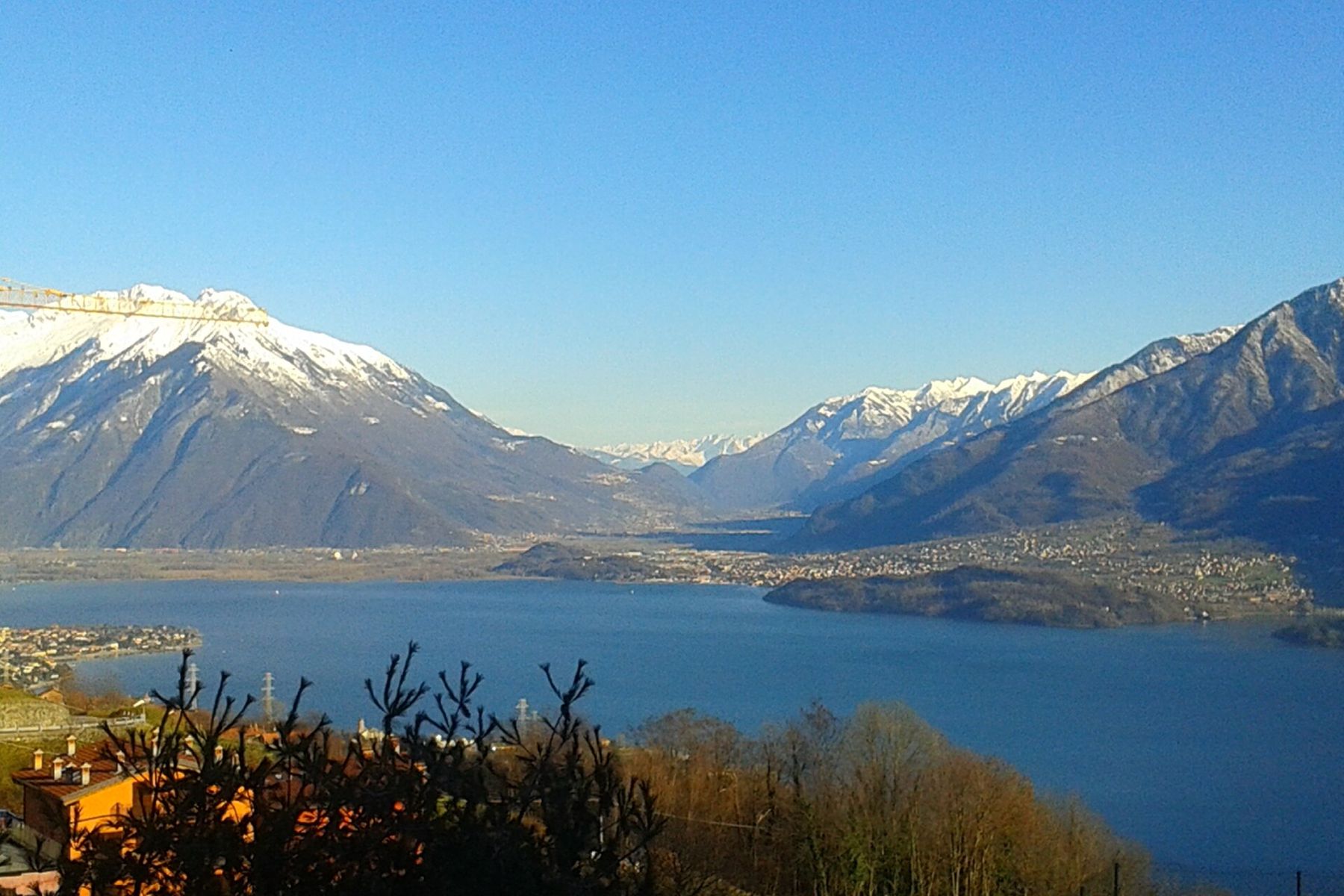
North of Monza the train reaches Lecco, at the foot of the southeastern arm of Lake Como, and then runs along the eastern shore. Going north, the lake is on the left. The line clings to the shore through short tunnels and small stations, with the mountains of the western shore across the water. At Colico, near the head of the lake, the valley opens towards the northeast.
i
Photo by Kibira · CC BY-SA 3.0
Up the Valtellina
The Valtellina is the long valley of the Adda river, running east from the head of Lake Como towards the Swiss border. Its floor is broad and farmed, with apple orchards and towns spaced along the line. On the north-facing slopes above Sondrio, terraced vineyards climb hundreds of metres up the mountainside, held in place by dry stone walls.
The train stops at Morbegno and Sondrio, the main town of the valley, before reaching Tirano at the end of the line. It is a quiet, unhurried stretch. Use it to rest, because the next part needs your attention.
The square at Tirano
Tirano is where the standard-gauge Italian line ends and the metre-gauge Rhaetian Railway begins. The two stations sit side by side across a small square, a walk of a minute or two with bags. Leave the Italian station, turn to look along the square, and the Swiss station is the low building with the red trains waiting beside it.
The town itself is Italian, but the Rhaetian Railway station is run as a Swiss station, and customs controls may be carried out either here or on the train near the border. Have your passport or identity card ready. Switzerland is in Schengen but outside the EU customs union, so goods checks are possible. Tirano's two stations are worth a separate look if you have an hour between trains.
Leaving Tirano, the Bernina train runs through the town on the street, past houses and the white basilica of the Madonna di Tirano, before reaching the border at Campocologno and entering Switzerland.
E Change here forCopenhagen to Flåm: two capitals and a fjordTwo days, comfortablyBrusio, Poschiavo and the climb to Alp Grüm
A few kilometres inside Switzerland, near Brusio, the line gains height on a circular viaduct: a stone spiral in a meadow, where the train curves right round and crosses over its own track. It is the line's best-known structure, and you will see it best looking back as the train climbs away from it.
The valley above is the Valposchiavo, Italian-speaking and Swiss. Poschiavo is its main town, a square of grand houses at the valley's heart. Above it, the line starts its serious climb. The Bernina line is worked entirely by adhesion, without rack, and its gradients are among the steepest of any adhesion railway in the world. You feel the train working: the slow grind of the motors, the long curves, the hairpins cut into the hillside.
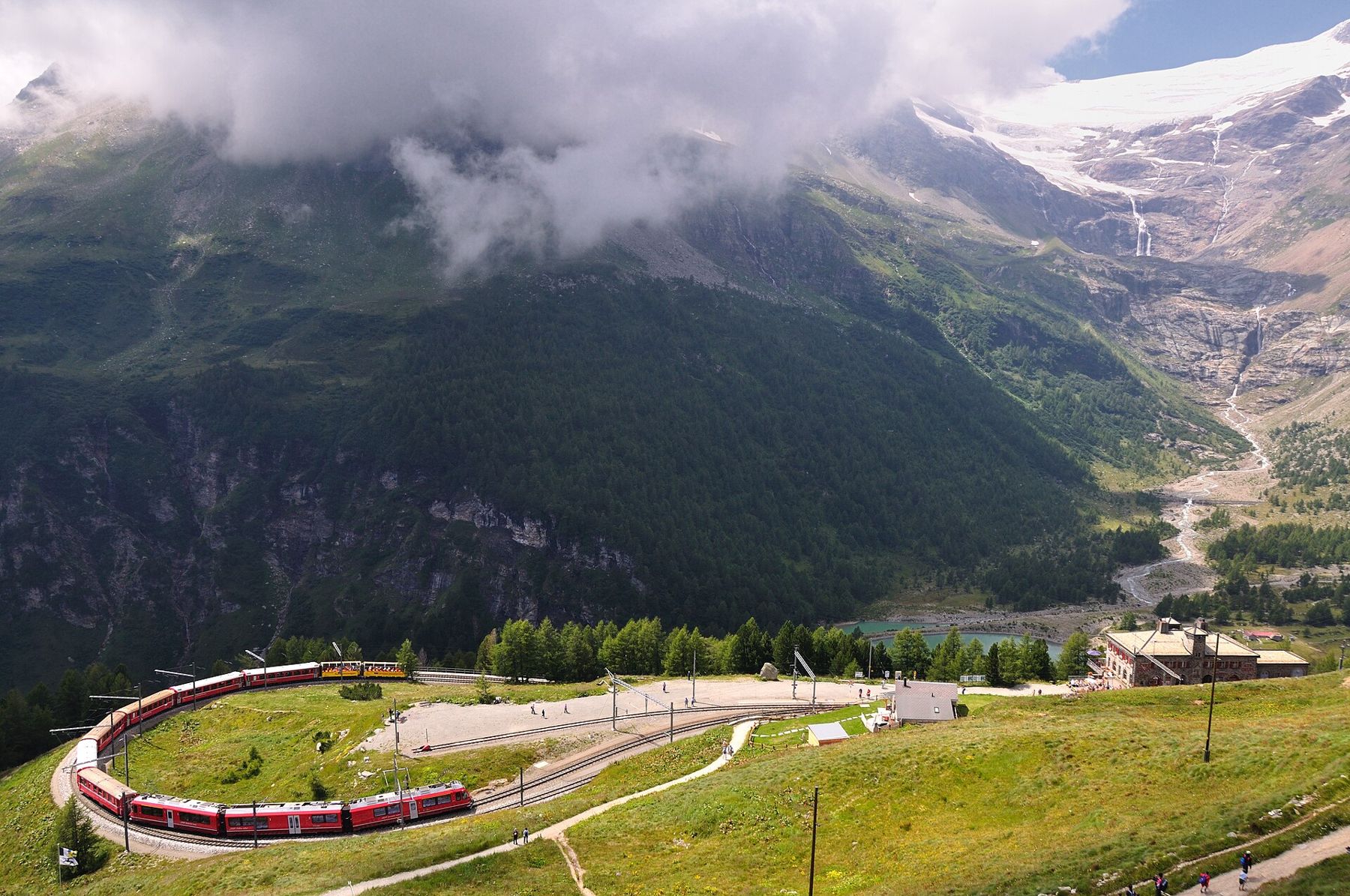
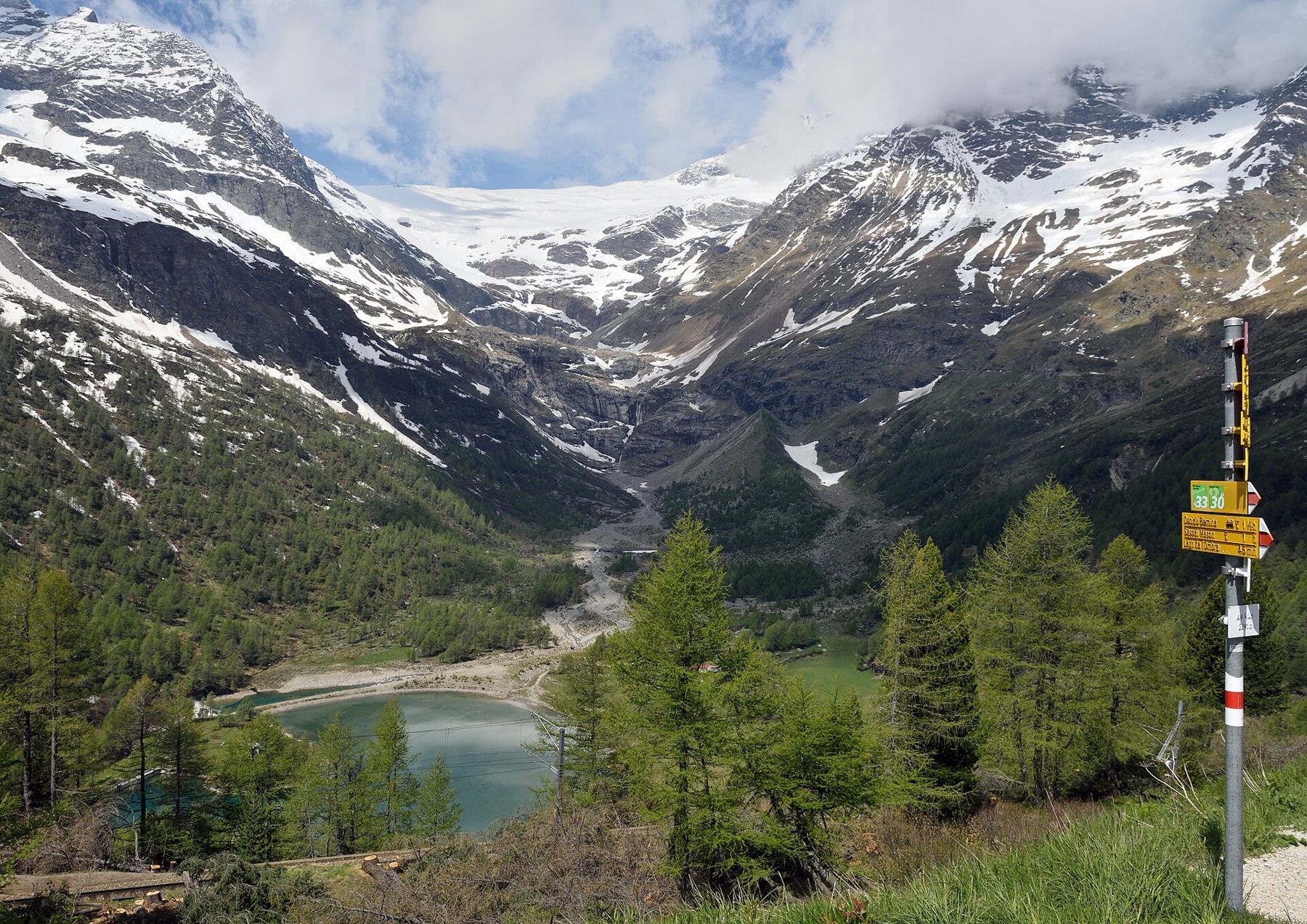
Alp Grüm is the station at the top of that climb, perched on a ledge with the Palü glacier across the valley and the small turquoise lake of the Lago Palü below. Many trains pause here briefly. It is also a good place to break the journey on foot: walking paths lead along the ridge and down to the lake.
i
Photo by Geogast · CC BY 4.0
i
Photo by Cayambe · CC BY-SA 4.0
Across the pass and down into the Engadine
Above Alp Grüm, the line reaches the Bernina pass and its highest point at Ospizio Bernina, a little over 2,250 metres above sea level. This is the summit of the journey and, on most days, the coldest place on Line B. Snow can lie up here well into early summer and arrive again in autumn.
The line runs past Lago Bianco, a long reservoir across the pass, which drains towards the Adriatic on one side and, beyond the watershed, the Black Sea on the other. In winter the reservoir is a white sheet; in summer it is a milky blue. The descent on the Engadine side is gentler, past Bernina Diavolezza and Morteratsch, where the Morteratsch glacier spills down towards the line, and on to Pontresina.
From Pontresina the train continues the short way to St. Moritz, or connects with trains along the Engadine valley. St. Moritz station sits beside its lake, below the town.
The Bernina line is worked entirely by adhesion, without rack, and its gradients are among the steepest of any adhesion railway in the world.
Trains, tickets and the time of year
The Bernina line and the Albula line beyond St. Moritz were inscribed together as a UNESCO World Heritage site in 2008, recognised as a railway built to work with its mountain landscape rather than against it.
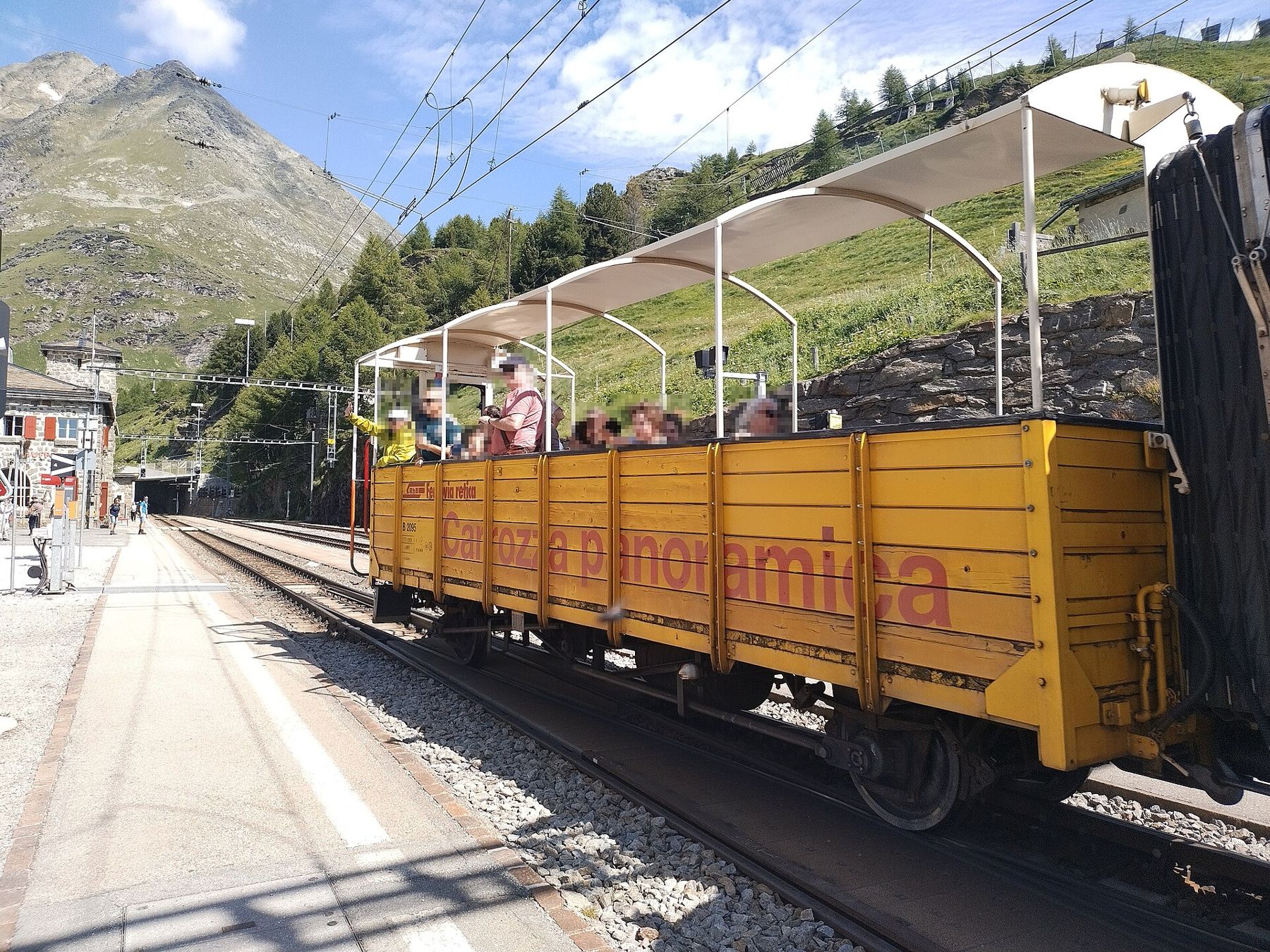
- Ordinary regional trains of the Rhaetian Railway run between Tirano and St. Moritz throughout the year, without compulsory reservations. Some have open summer wagons attached in good weather.
- Panoramic trains with large windows also run the route; they need a reservation and supplement, and in summer they fill early. The regional trains run over exactly the same track.
- Snow can delay trains in winter, and the line is sometimes closed for works in spring or autumn. Check the Rhaetian Railway's current timetable before travelling.
- Italian regional trains to Tirano can run late. Allow a comfortable margin at Tirano rather than the shortest connection the timetable offers.
The best months for the view are June to September, when the snow has gone from the line and the glaciers are clear. A winter crossing is a different journey: white on white, the sun low, the train slowed by the snow. Either way, sit where you can see out on both sides if you can, because the views switch from one to the other on the hairpins.
Line B works best as one half of a circle through the Alps. From St. Moritz, Rhaetian Railway trains continue over the Albula to Chur and on to Zürich, from where Line A under the Gotthard takes you back to Milan.