Paris to Amsterdam, with a stop in Antwerp
Line D links two capitals in roughly three and a half hours on one fast train. Stepping off halfway, in one of Europe's grandest stations, costs a little planning and repays it.
i
Photo by Taxiarchos228 · CC BY 3.0
Line D is the busiest corridor on this map and one of the quickest. High-speed trains leave Paris Gare du Nord for Brussels, Antwerp, Rotterdam, Schiphol and Amsterdam several times a day, and the whole run takes roughly three and a half hours. You can sit in one seat from the Seine to the IJ. But the line passes through four countries' worth of station architecture in a morning, and one of those stations, Antwerpen-Centraal, is a reason to get off.
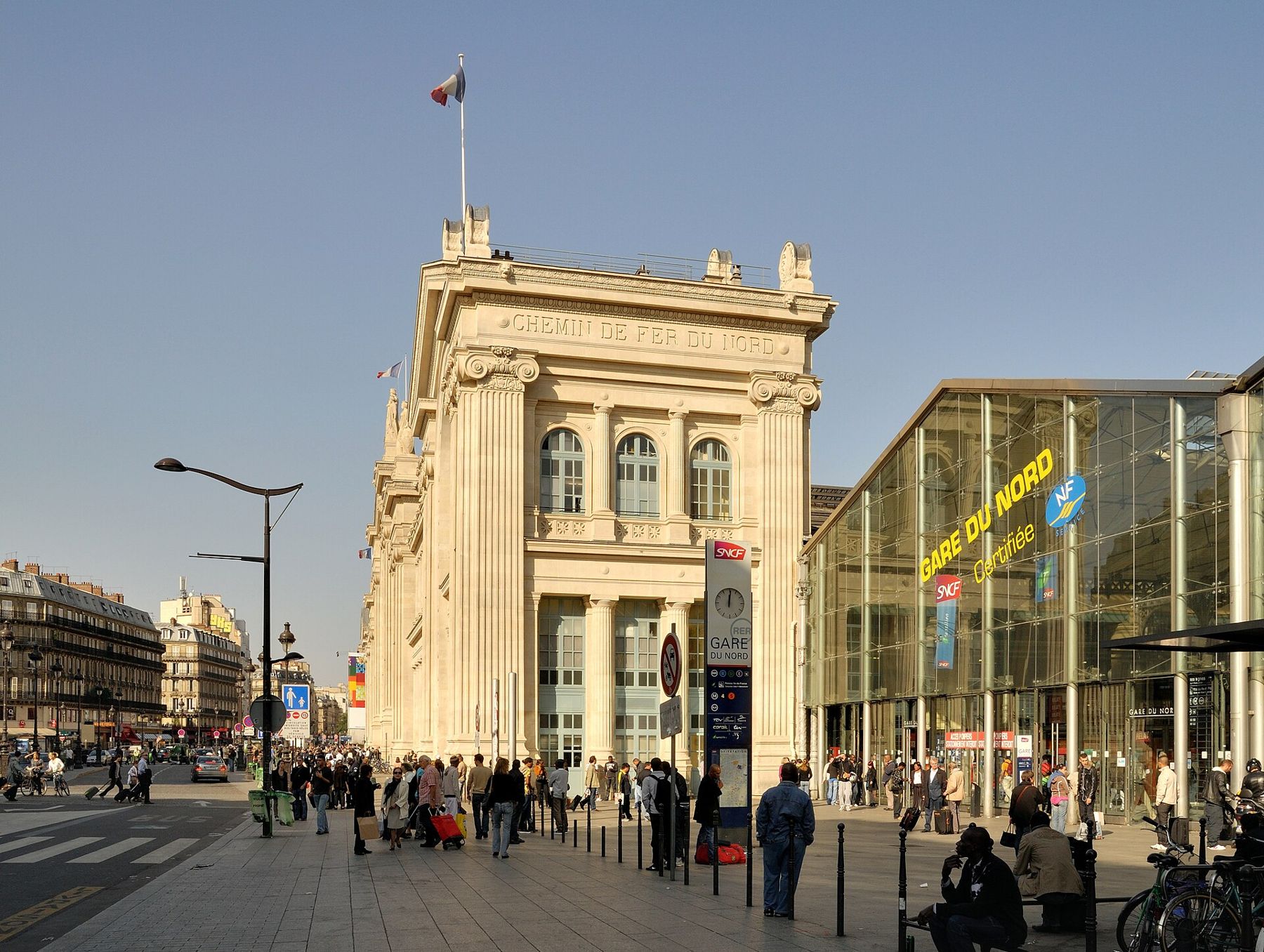
Gare du Nord and the run to the Belgian border
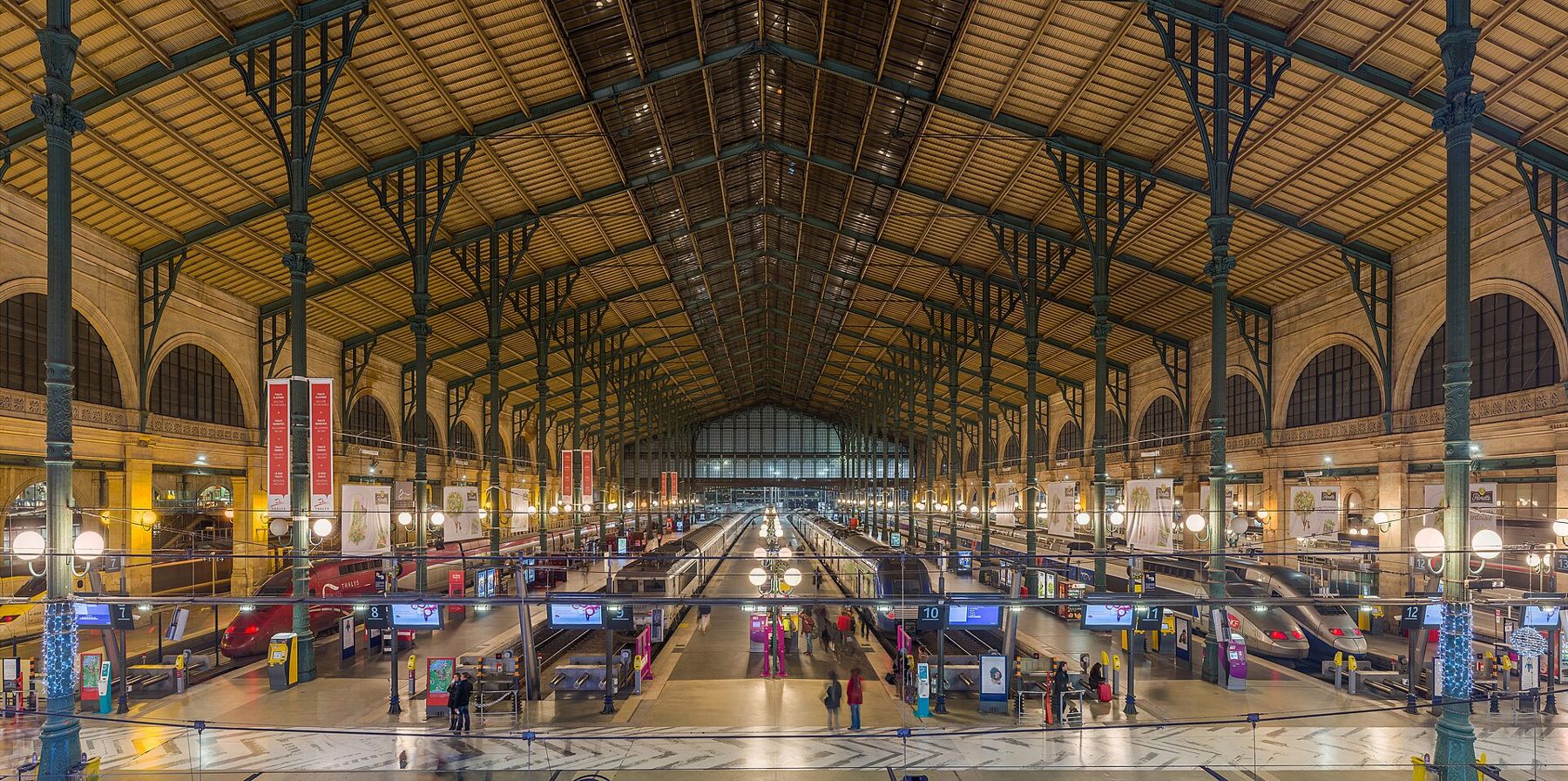
Gare du Nord is one of the busiest railway stations in Europe, and it feels like it. The stone front faces a small square in the tenth arrondissement; behind it, a vast iron train shed covers the platforms where high-speed trains to Belgium, the Netherlands and London leave beside suburban trains and regional services to the north of France.
i
Photo by Diliff · CC BY-SA 3.0
International trains to Brussels and Amsterdam usually leave from a set group of platforms, and boarding can close a few minutes before departure. Arrive with time to find the right platform; the departure boards show the train only a short while before it leaves.
Once out of Paris, the train joins the high-speed line north across the plains of Picardy towards Lille, then turns northeast to the Belgian border. The landscape is wide and flat, with big fields, wind turbines and, here and there, the memorials of the First World War on the horizon. At these speeds the border passes almost unnoticed.
Brussels-South, the working station
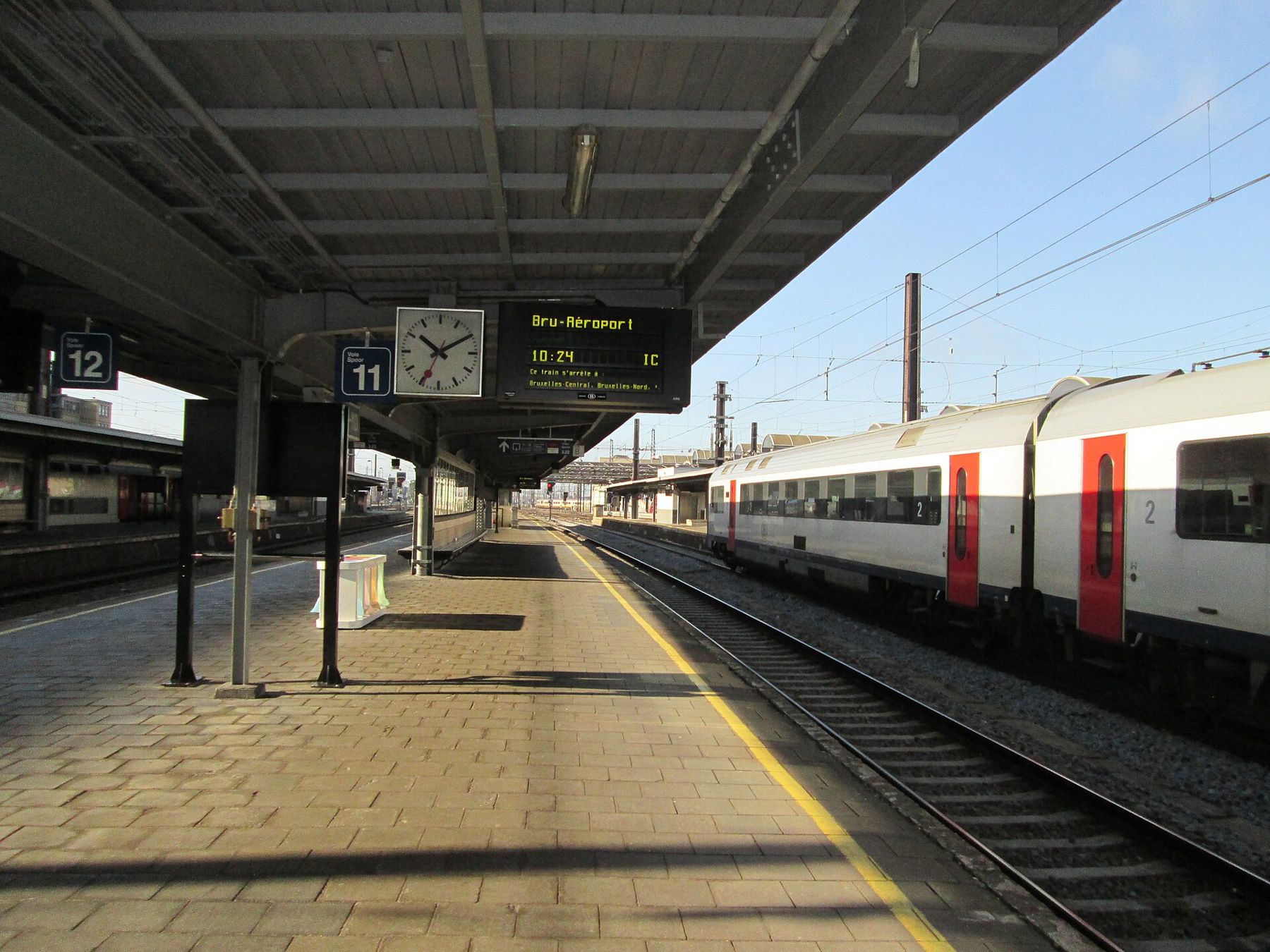
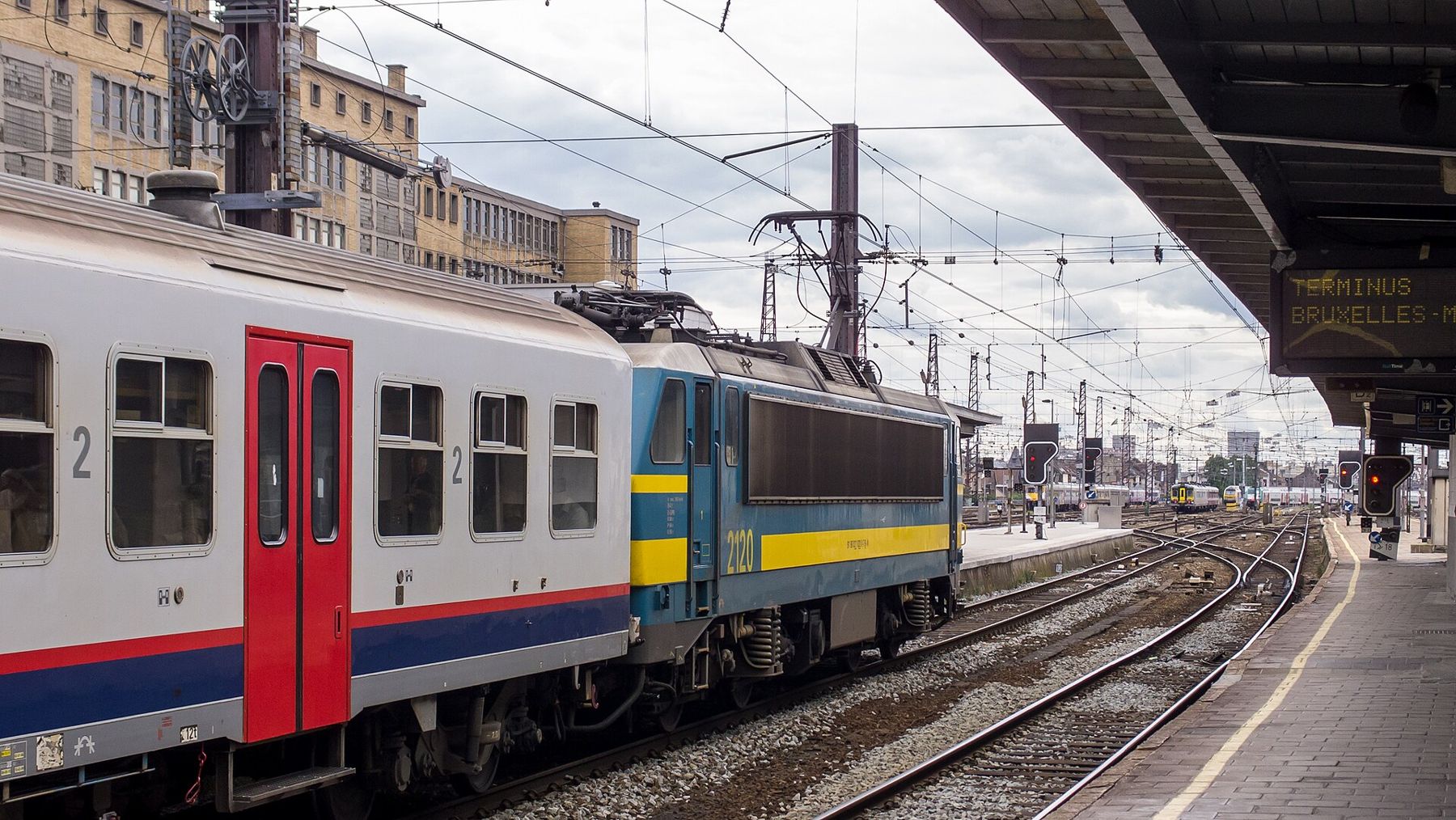
About an hour and twenty minutes after leaving Paris, the train reaches Brussels-South, known in French as Bruxelles-Midi and in Dutch as Brussel-Zuid. It is the main international station of Belgium, and it is a working station rather than a grand one: long platforms under low canopies, departure boards in two languages, and a steady traffic of domestic intercity and local trains run by the Belgian railways, SNCB.
i
Photo by Silbel · CC BY-SA 4.0
Most through trains to Amsterdam stop only briefly. If you are changing here, for instance to a domestic train, the platforms are connected by passages under the tracks, and the walk between them is short. For a change between international trains, allow more time: platforms for trains to France and the Netherlands may be at the far end of the station.
i
Photo by interbeat · CC BY 2.0
Antwerpen-Centraal, a station worth the stop
From Brussels, the train runs north towards Antwerp and enters the city underground. Antwerpen-Centraal was built as a terminus at the turn of the twentieth century, a stone palace with a dome over the entrance hall and a great iron and glass train shed behind. For most of its life, trains had to back out the way they came in. In the 2000s a tunnel was dug beneath the station and the city, turning it into a through station without losing the old building.
The result is a station on three levels. The original terminal platforms are still in use under the train shed at the top. Below them is a level of terminal tracks, and deepest of all are the through tracks in the tunnel, where high-speed trains between Paris and Amsterdam stop. From the platforms in the tunnel, you look up through open galleries to the roof of the old train shed far above. Escalators and lifts link the levels; give yourself time to find your way.
From the platforms in the tunnel, you look up through open galleries to the roof of the old train shed far above.
The entrance hall is the reason so many people call the station a railway cathedral: marble in many colours, a domed ceiling, wide staircases and a clock above the arches. It is free to walk through, and worth half an hour even if you take the next train on.
Change here forBasel: one city, three railwaysTen to twenty minutes between stationsAn afternoon in Antwerp
The station stands at one end of the Meir, a long pedestrian street that leads towards the old town. A walk of roughly twenty to thirty minutes brings you to the Grote Markt, the city hall and the Cathedral of Our Lady, whose spire is visible from much of the city. The Scheldt river, with its quays, lies just beyond. If you have a few hours, that walk and back is enough to give the stop shape. With a night, Antwerp has its museums, the old port districts and a quieter evening than either capital at the ends of the line.
One ticket or two
Breaking the journey is easy in principle and a little more fiddly in practice. High-speed tickets on this route are usually for a named train, not a route, so you cannot simply step off in Antwerp and catch a later high-speed train on the same ticket. You have a few options.
- Buy two high-speed tickets: Paris to Antwerp, then Antwerp to Amsterdam on a later day or a later train. This is simple but means two separate journeys.
- Take the high-speed train to Antwerp and continue on the slower intercity trains run jointly by NS and SNCB between Brussels, Antwerp, Rotterdam and Amsterdam. Tickets for these trains are usually more flexible.
- Combine a high-speed leg with Belgian domestic trains between Brussels and Antwerp, which run frequently.
With separate tickets, a delay on the first leg is your own problem, not the railway's, so leave plenty of time. Through tickets, separate tickets and missed connections explains the general rules in more detail.
Rotterdam, Schiphol and the last stretch
North of Antwerp, the train crosses into the Netherlands and joins the high-speed line to Rotterdam, running for part of the way through a long tunnel under the farmland of the Green Heart. Rotterdam Centraal was rebuilt in the 2010s with a sharp, steel-clad roof that points into the city like a prow. It is a bright, open station and an easy place to change.
From Rotterdam the line continues to Schiphol, where the station sits directly under the airport, and then into Amsterdam. Amsterdam Centraal, opened in 1889, stands on artificial islands in the IJ, its red-brick front facing the old city and its train shed open to the water behind. From the front, trams and the metro leave for the city, and the canal belt begins a few minutes' walk away.
If you are travelling further, Amsterdam is where Line C east to Copenhagen begins. Antwerp, for its part, is a gentle first lesson in big stations with luggage: its levels are well signposted, and the station is calm at most times of day.
Small things on Line D
- Timetables and stopping patterns change; not every high-speed train stops at Antwerp or Schiphol. Check the current timetable before choosing a train.
- Seats on high-speed trains are reserved and included in the ticket. Fares rise as trains fill, so book early for busy days.
- Luggage racks fill quickly on busy trains. Large cases go at the ends of coaches; smaller bags overhead.
- Within the Schengen area, routine passport checks between France, Belgium and the Netherlands are rare, but carry identification all the same.
Line D is short enough to do in a morning and rich enough to take a weekend. If you only stop once, make it Antwerp.