Copenhagen to Flåm: two capitals and a fjord
Line E crosses a strait, follows a coast, climbs onto a mountain plateau and drops to the sea again. Two days, three countries, and the most varied windows on this map.
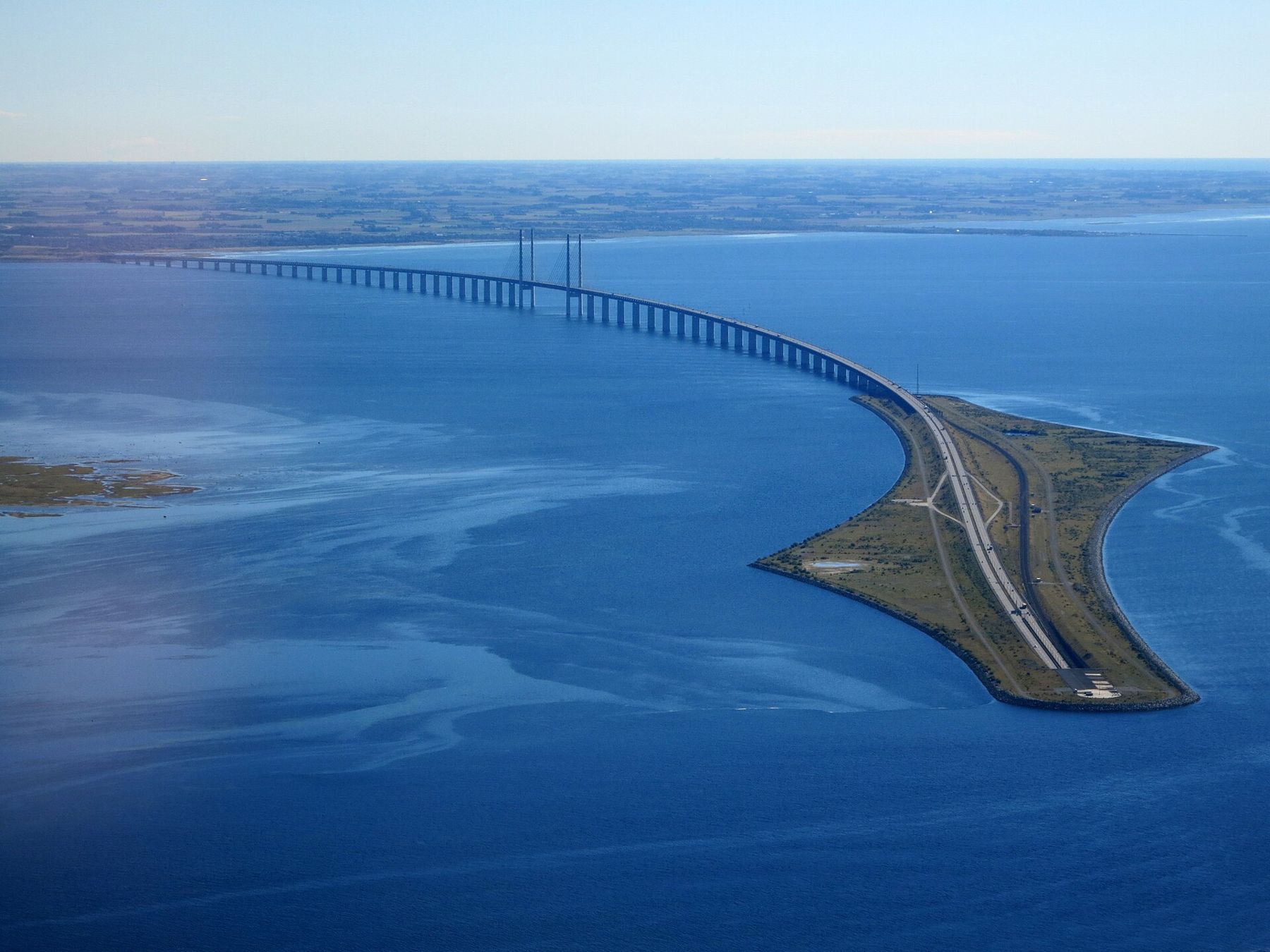
i
Photo by Nick-D · CC BY-SA 4.0
Line E is the line that changes most along its length. It leaves Copenhagen at sea level, crosses into Sweden on a bridge over open water, runs up the Swedish west coast to Oslo, then climbs onto the high plateau of southern Norway before dropping down a branch line to a fjord. You can, in theory, do it in a single very long day. It is far better done in two, with a night in Oslo, and that is how it is described here.
Over the strait to Sweden
Trains for Sweden leave Copenhagen Central and run out past the airport at Kastrup. Soon after, the line drops into a tunnel under the Drogden channel, comes up on the artificial island of Peberholm, and then climbs onto the Øresund Bridge. The crossing, opened in 2000, carries the railway on its lower deck with the motorway above, and from the train you look out between the girders at the open sea.
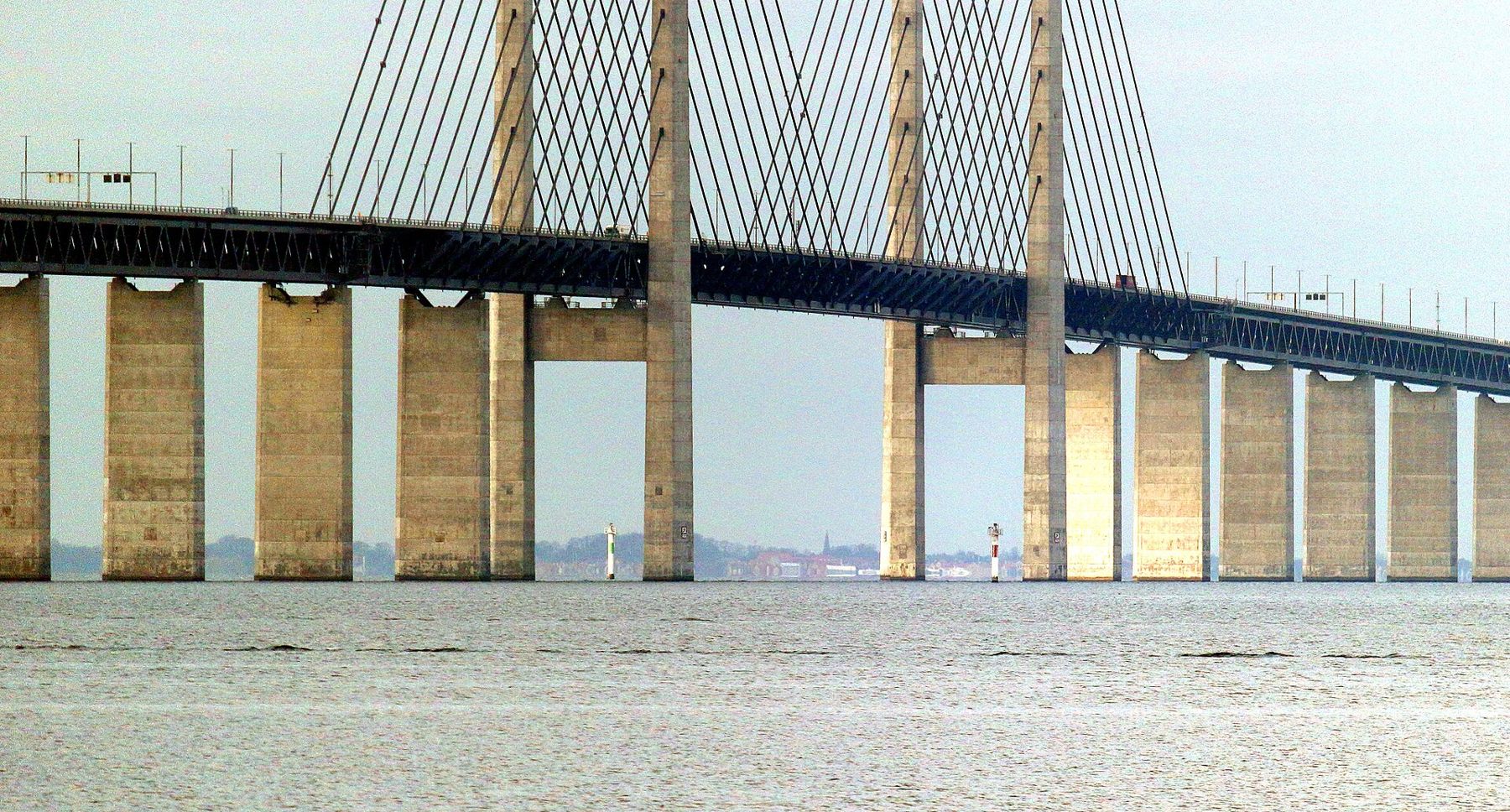
i
Photo by Lars A · CC BY-SA 4.0
The whole crossing takes only a few minutes. Identity checks on trains entering Sweden have been introduced and lifted at different times over the years, so carry your passport or national identity card and check the current situation before you travel.
From the Swedish end of the bridge, some trains continue to Malmö and others run up the coast. For Line E, the aim is Gothenburg, roughly four hours north. Depending on the timetable, you may travel direct from Copenhagen or change at Malmö or Helsingborg.
Up the Swedish west coast
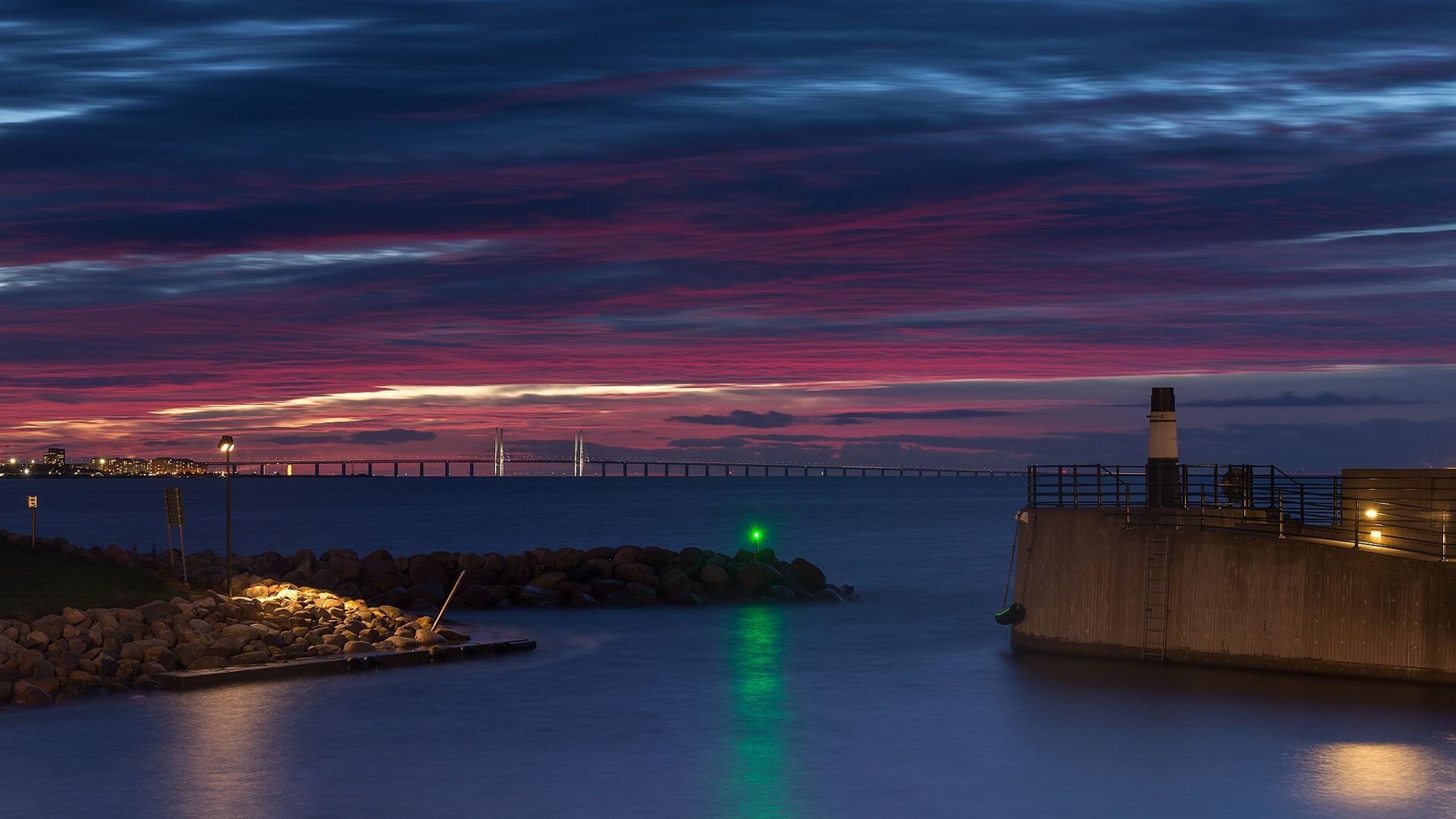
North of Helsingborg the line follows the Kattegat coast through Halmstad and Varberg. It is open, gentle country: farmland, pine woods, low hills and glimpses of the sea to the left as you travel north. In summer the light lasts late into the evening, and in winter the coast can be grey and wind-blown, but it is rarely dull.
Gothenburg Central is one of the oldest railway stations in Sweden still in use, a long, low building in the city centre with a large hall. It is the natural change point on this line. Leave an hour here if you can: connections between the coastal trains and the trains to Oslo are not frequent enough to make a missed one painless.
i
Photo by Arild Vågen · CC BY-SA 4.0
Gothenburg to Oslo, the quiet stretch
The line from Gothenburg to Oslo is the slowest part of Line E, and the least known. It follows the Göta river north past Trollhättan, then runs through forest, lakes and rocky farmland to the Norwegian border near Halden. The trains are not fast and the timetable has been thin at times, with works and changes to service, so check the current timetables of SJ and Vy before relying on a particular connection. Allow roughly four hours.
In Norway the line passes Fredrikstad and Moss before running along the Oslofjord into the capital. Oslo Central Station stands at the head of the fjord, near the waterfront and a short walk from the city centre. This is where most travellers stop for the night. Leaving Oslo in the morning gives you the Bergen Line in daylight, which is the point of the journey.
Change here forChanging trains at Hamburg HauptbahnhofA change of one hourThe Bergen Line and the high plateau
The Bergen Line runs from Oslo across the mountains to Bergen on the west coast. Line E uses most of it, leaving at Myrdal. From Oslo the train runs northwest through Drammen and Hønefoss, then up the long valley of Hallingdal past Gol and on to Geilo, a mountain resort at the edge of the plateau. Allow roughly four and a half to five hours from Oslo to Myrdal.
Above Geilo the line climbs onto the Hardangervidda, the high mountain plateau of southern Norway. The trees thin, then disappear. Lakes lie in shallow hollows, and snow lingers in drifts well into summer. Finse, at about 1,220 metres, is the highest station on the line, a cluster of buildings by a lake below the Hardangerjøkulen glacier, with no road access. Long snow sheds protect the track in the worst stretches. In winter the plateau is a white world, and trains can be delayed or, in the worst weather, stopped.
The trees thin, then disappear.
Myrdal and the Flåm Line
Myrdal is a station on a mountain shelf with no road, where the Bergen Line meets the Flåm Line. You change here, usually with a short walk across the platform to the train waiting for the descent. The timetables of the two lines are arranged to connect, but a late train from Oslo can still miss the next departure down. The change at Myrdal has more on what to expect, including the walks you can make if you arrive early.
The Flåm Line itself is only about twenty kilometres long, but in that distance it drops roughly 860 metres from Myrdal to sea level at Flåm, making it one of the steepest standard-gauge railways worked by adhesion. The descent takes about an hour. The line twists through tunnels, including spiral tunnels, and along ledges above the valley of the Flåmselvi river, with waterfalls dropping down the cliffs. In season the train stops at Kjosfossen, a waterfall beside the track, to let passengers out onto a platform for a few minutes.
At the bottom, Flåm sits at the head of the Aurlandsfjord, an arm of the Sognefjord, with mountains rising steeply on either side of the water. It is a small place, busy in summer, and the end of the line.
i
Photo by Rose Abrams · CC BY 4.0
How the two days fit together
A comfortable plan for Line E looks like this.
- Day one: Copenhagen to Gothenburg, change, then Gothenburg to Oslo. Leave in the morning and arrive in the evening.
- Day two: Oslo to Myrdal on the Bergen Line, change, then the Flåm Line down to the fjord. Leave Oslo in the morning to see the plateau in daylight.
There are several things to check before you commit.
- Seat reservations are required or recommended on many Norwegian long-distance trains, including the Bergen Line, and summer trains fill early. The Flåm Line is very busy in high summer.
- The Gothenburg to Oslo line has had periods of closure and reduced service. Check the current timetable before you plan around it.
- Separate tickets for each country are common on this line. A late train on one ticket does not protect your connection on the next, so build in time. Through tickets and missed connections covers the general rules.
- Snow on the plateau can cause delays from autumn to late spring. If you travel then, leave slack in your plans.
Line E starts where Line C from Amsterdam ends, so the two can be joined into a long journey from the Netherlands to the Norwegian fjords. Done that way, with a night in Hamburg and another in Oslo, it is one of the great overland journeys of northern Europe. Pack for every season: luggage and the walk between platforms matter more here than on any other line, because the last change is on a mountain.