London to the Netherlands by rail and sea
Before the tunnel, this was a classic way from London to the continent. It still works: a train to the Essex coast, a ship across the North Sea, and a metro into Rotterdam.
i
Photo by Ymblanter · CC BY-SA 4.0
For most of the twentieth century, travellers from London to the Netherlands and beyond went this way: a boat train from Liverpool Street to the Essex coast, a ship across the North Sea, and trains waiting on the quay at the Hook of Holland for Amsterdam, Germany and further east. The boat trains have gone and the Dutch quayside trains have changed form, but the route still works, and for anyone who prefers a sea crossing to a tunnel it is one of the most satisfying ways to leave Britain.
i
Photo by Sneeuwvlakte · CC BY-SA 4.0
Out of London from Liverpool Street
The journey starts at Liverpool Street, the terminus in the City of London for lines to Essex and East Anglia. Trains for Harwich International run out through the eastern suburbs and the Essex countryside to the Stour estuary. Some run through to Harwich; on others you change at Manningtree, a junction on the main line to Ipswich and Norwich, for the short branch along the estuary. The journey takes roughly an hour and a half, depending on the connection.
Harwich International station is at the port itself, not in the old town of Harwich, which lies a little further along the branch. The walk from the platform to the passenger terminal is short. Check the current timetable for trains that suit your sailing, and plan to arrive well before the check-in deadline for foot passengers, which is earlier than many people expect.
Foot passenger at a ferry port
Most people at Harwich are driving or hauling freight. As a foot passenger you check in at the terminal with your passport and are taken on board by a walkway or a short bus ride, depending on the arrangements on the day. The process is quiet and unhurried compared with an airport, but it has fixed deadlines, and a late train from London will not hold the ship.
The United Kingdom is outside the Schengen area, so passports are checked on this route in both directions; Dutch entry checks happen on arrival at the Hook. The rules for entering the Schengen area have been changing, with new electronic registration being introduced for many non-EU travellers. Check the current requirements for your nationality before you travel, and allow extra time.
A day or a night on the North Sea
There are two kinds of crossing: a day sailing and a night sailing. The day crossing takes most of a working day, roughly six to seven hours, and gives you time to sit by a window, walk the open decks, read and eat. The night crossing takes longer, leaving in the evening and arriving in the morning, and on night sailings a cabin is normally part of the deal. Arriving rested in the morning, with a full day ahead in the Netherlands, is the great advantage of the night boat.
Change here forThe Fehmarn Belt: a short sea crossing, for nowAbout 5 hours, Hamburg to CopenhagenThe North Sea is not always kind. In autumn and winter, crossings can be rough and are occasionally delayed or cancelled by weather. In summer, they are usually calm and long and pleasant. If you are prone to seasickness, a cabin or a seat low and near the middle of the ship helps.
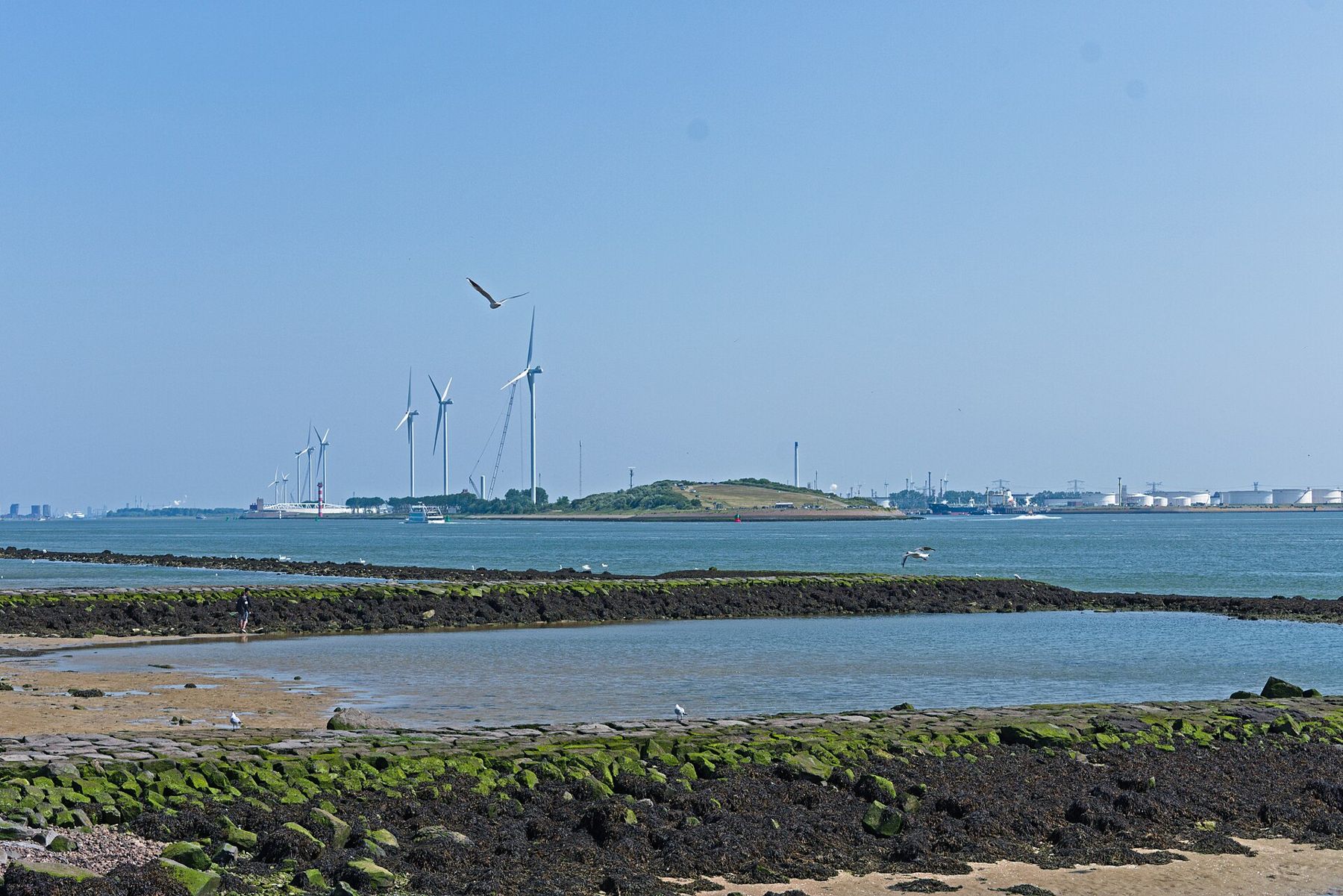
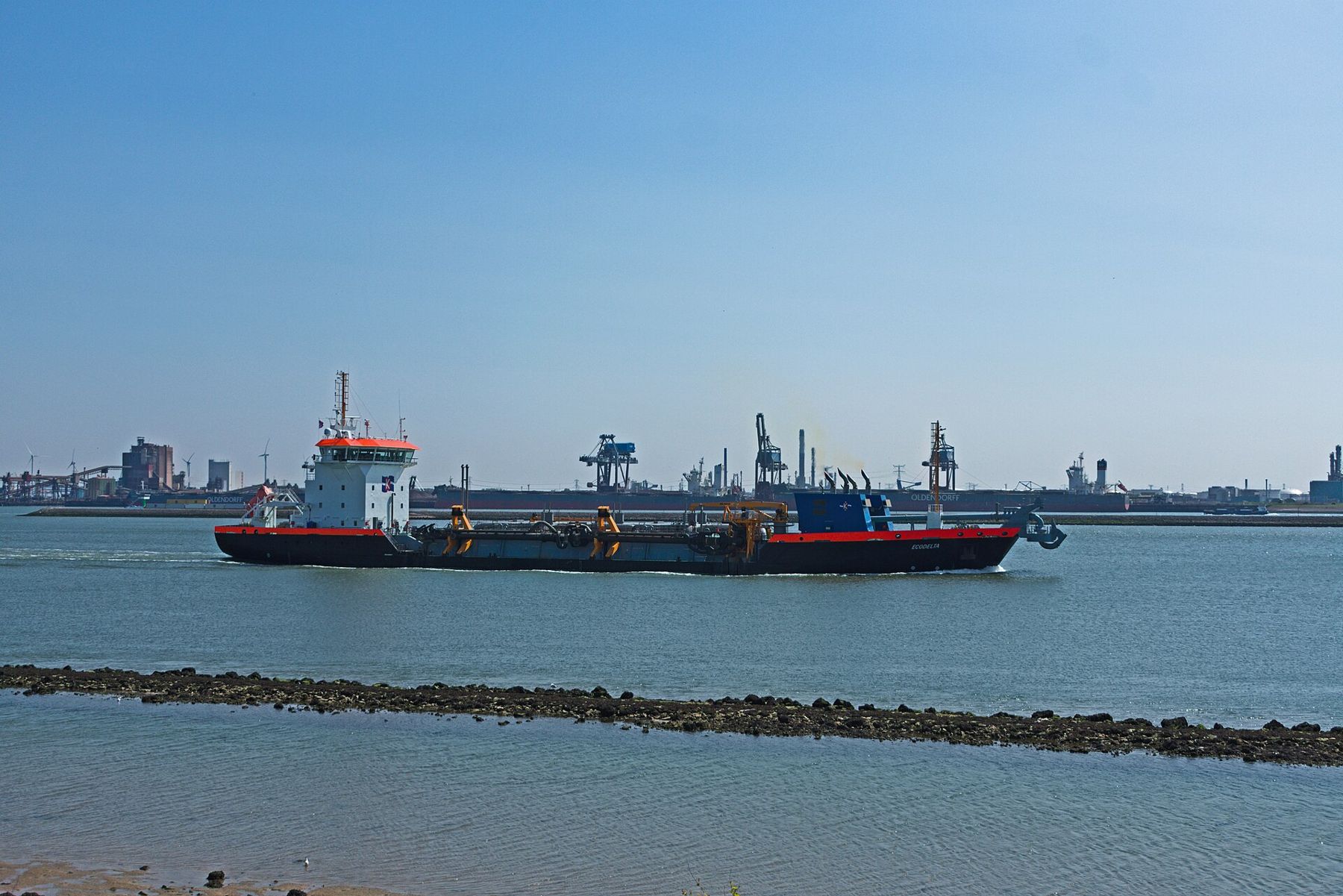
The approach to the Dutch side is low and flat: the dunes of the coast, the mouth of the Nieuwe Waterweg, and the beginnings of the port of Rotterdam stretching inland along the water. Stay on deck for the last half-hour if the weather allows.
i
Photo by Ymblanter · CC BY-SA 4.0
From the quay to Rotterdam by metro
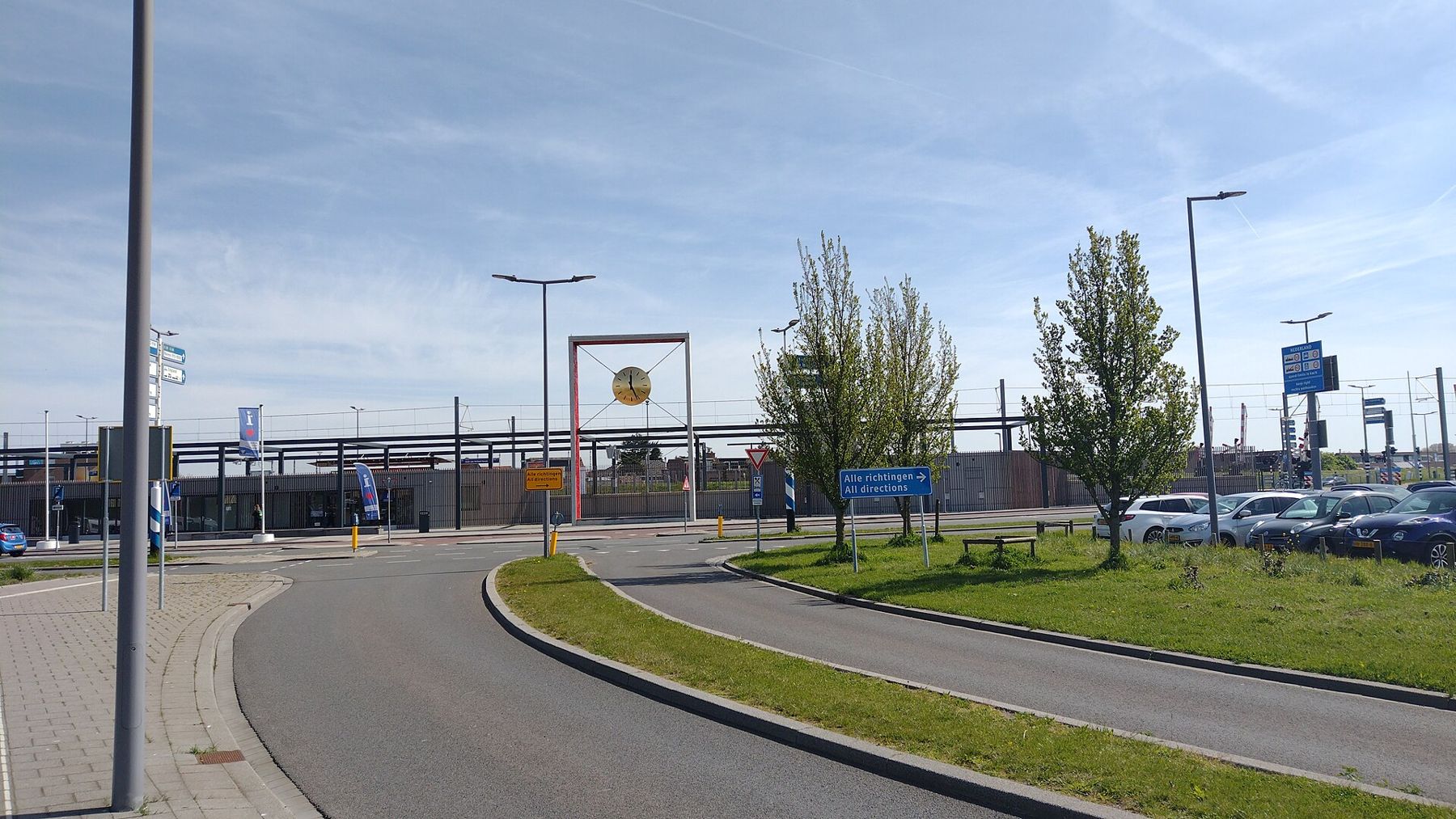
Hoek van Holland was for many years the end of a Dutch main-line railway, with international trains waiting at the quay. That line has been converted into part of the Rotterdam metro, and since 2019 the metro has run all the way out to the Hook. From the ferry terminal you walk to the nearby metro station and take the train inland, through Maassluis and Vlaardingen, to Schiedam and central Rotterdam.
The metro does not run straight into Rotterdam Centraal. For the main station, change at Schiedam Centrum to a mainline train, or ride on into the city and change to another metro line. Both work; the right choice depends on where you are heading next. The ride from the Hook to central Rotterdam takes well under an hour.
From Rotterdam Centraal, trains run to The Hague, Amsterdam, Antwerp and Brussels. For the onward line north and south, see Paris to Amsterdam, with a stop in Antwerp.
One ticket or several
This route crosses three separate systems: a British train, a ship, and Dutch public transport. Combined rail and sea tickets between British and Dutch stations have been sold in various forms over the years. If one is on sale when you travel, it can simplify the journey and may give some protection if a late train makes you miss the boat. If not, you buy the three parts separately and take your own chances with the connections. Read through tickets and missed connections for how that works in general. Passenger rights in Britain follow British rules, and ferry passengers have separate rights of their own.
The Dutch metro is paid for in the same way as the rest of Dutch public transport. Check the current options for paying by bank card or buying a ticket at the station before you arrive.
Bags on a ship and a metro
- Pack so that you can carry everything yourself from train to terminal to ship to metro. There are long corridors and ramps on both sides.
- On a night crossing, keep what you need for the morning in a small bag; cabins are compact.
- For more on handling bags through stations, see luggage, seats and the walk between platforms.
- Sea crossings, rail timetables and border rules all change. Check every part of the journey shortly before you travel.